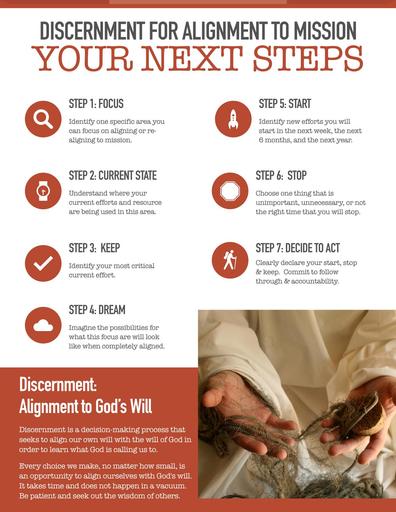
When we sit down with diocesan and parish leaders to talk about mission, there’s usually a lot of energy in the room. They know something isn’t working. They feel it. And when we start naming mission clearly – when we start talking about actual discipleship – the Holy Spirit ignites something in us.
Ideas come quickly, people lean forward, and discussions get animated (and often louder). You can feel the possibility in the room.
I’ve sat in rooms where every staff member was on board. Not just nodding – genuinely willing to wrestle with hard questions about moving from maintenance to mission.
And then all too often… the decisions freeze.
Not because no one cares.
Because something familiar has to die.
For a long time, I thought the challenge was clarity. Or strategy. Or energy.
It isn't. The challenge is structure.
The mission of the Church is not just about evangelizing people. It’s about evangelizing the structures of the Church – the systems, habits, and defaults that quietly determine what gets resourced, what gets protected, and what gets shut down before it ever has a chance to grow.
What leaders prioritize shapes culture over time. Parish leadership and evangelization priorities are never separate conversations – they reveal what we actually believe about mission.
Structures don't change just because we clarify our mission or refine language. They change when leaders repent.
The Structures Reveal the Heart
Structure is simply leadership made visible over time, and the structures of a parish or diocese inevitably reflect the formation of the people leading them.
If we try to build missionary culture without attending to basic human formation – emotional maturity, relational skills, personal accountability, self-awareness, interior freedom – we’re building on sand. Even the best evangelization strategies won’t hold.
I've seen this, and I've done it myself.
When I feel uncertain, I tighten control. When I feel exposed, I default to what I know works. When I don’t want conflict, I design around it. And then I call it prudence.
We can attend formation days. We can refine language. We can draft pastoral plans. But if a leader hasn’t allowed Jesus to touch the places that are reactive or self-protective, those same patterns will quietly get baked into the structure.
And that structure may still bear fruit – just mostly low-hanging fruit that doesn’t cost us anything. The people who already know how to navigate church culture.
Beyond our line of sight hangs far fruit – the spiritually distant, the culturally disconnected, the ones who don’t speak our language yet.
Structures built around comfort don’t stretch that far.
We continued wrestling with those same tensions around formation, expectancy, leadership, and trust in the Holy Spirit in A Pentecost People →.
When Fear Shapes Structure
We were working with a pastor who had a staff member actively undermining the parish’s mission and vision.
This music and liturgy coordinator skipped prayer meetings. Rolled his eyes at formation language. Stirred up resistance among musicians. Eventually, he cornered the bishop in the sacristy after a Confirmation Mass to complain that the parish was “going downhill fast.”
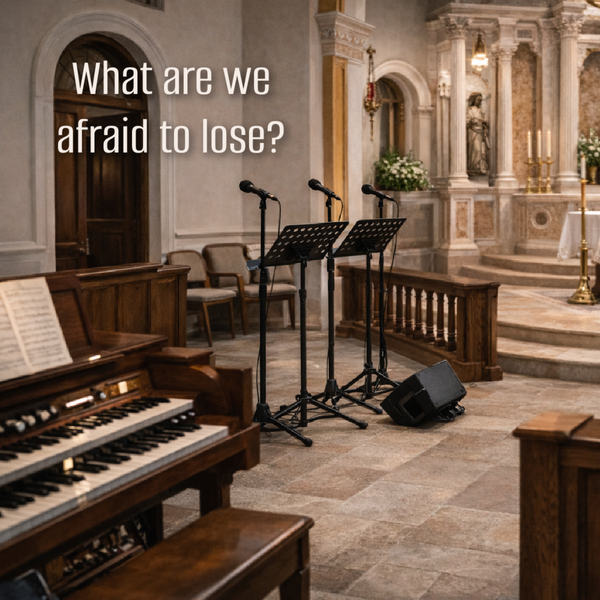 It was clear he could not stay. But when the core leadership team named that reality, the pastor admitted what was really underneath his hesitation: fear.
This was the only organist in the parish. He planned the music and accompanied every Mass, funeral, and wedding. If he left, he might take the choir and cantors with him. There might be no music at Mass. The parish might look worse. People would complain.
The pastor's structural paralysis wasn’t theological. It was emotional.
The leadership team didn’t panic. They reminded the pastor that Mass can be valid, licit, and beautiful without music if necessary. They told him they had his back.
Then they prayed – explicitly against a spirit of fear.
The staff member was let go. Two choir members left with him. The parish sang a cappella at Masses for six weeks. And then a new accompanist emerged.
What changed first wasn’t the structure. It was the pastor’s willingness to let Jesus confront his fear of loss – and the leadership team standing with him as the Holy Spirit moved.
When Fear Sounds Reasonable
With the organist, the fear was visible. Losing music. Losing stability. Losing face.
Sometimes the fear isn’t that obvious.
It doesn't announce itself and doesn't sound defensive. Instead it shows up as caution and sounds reasonable.
We tell ourselves we're being pastoral. We don't want to overwhelm people. We don’t want to push too hard. We don’t want to alienate the very people we’re trying to reach.
So we soften edges. We talk about belonging without talking about repentance. We encourage community, but ignore surrender. We skip over or drift from the heart of the kerygma.
And sometimes the fear goes deeper than tone. Sometimes it's about whether we are willing to be encountered.
There was a season in my own ministry when my only real prayer time was when I was leading teens in prayer.
I was facilitating encounters. Creating space. Asking questions. But I wasn’t letting Jesus meet me.
I confused their emotional responses for conversion. I mistook their experiences for transformation. And I missed the deeper invitation – to walk with them beyond the moment.
If I’m honest, I missed it because I was missing or ignoring the deeper invitation Jesus had for me.
Before I could help anyone rethink structures, I had to repent.
Serving Jesus – But Missing Him
It turns out, I wasn't the only one.
In another diocese, the obstacle wasn’t curriculum. It was identity.
Catechetical leaders had poured years into their work. Faithfulness. Sacrifice. Love. Over time, their sense of worth had fused with the way things had always been done. So when we began talkinag bout missionary shift, it didn't feel like possibility. It felt like indictment.
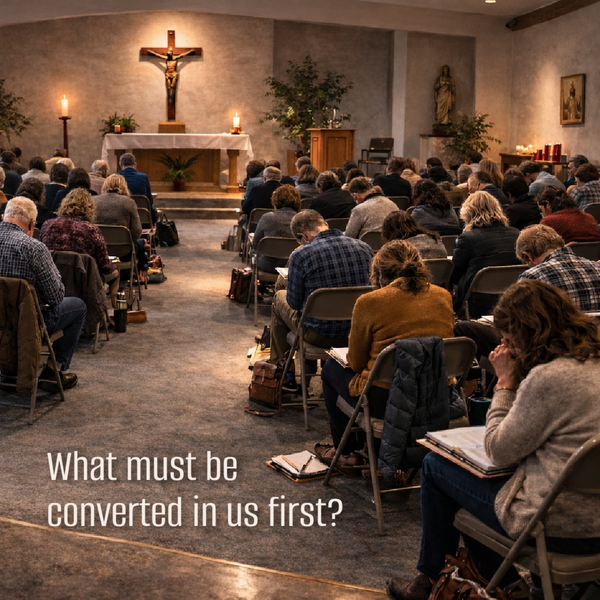 They heard, “You’ve been doing it wrong,” when what we were saying was, “There’s more.”
We could have adjsuted frameworks, revised the plan, or added clearer language. But none of that would have touched what was underneath.
So we gathered the catechetical leaders and prayed together – repenting for the ways we had missed the mark in leading people to Jesus.
The purpose wasn't shame the past or dismantle what had been good. It was to stand together before Jesus and admit that in our efforts to serve Him, we had sometimes missed Him. We named the ways we had settled for activity over discipleship. The ways we had measured success in numbers instead of conversions. The times we had skipped over proclamation and moved too quickly into doctrine. The opportunities to accompany – to be Jesus' hands and feet – that we had missed.
They weren’t ready to unpack every personal wounds. But they could name wounds in ministry. And that was enough.
We invited Jesus into those wounds and offered up our sorrow for the ways we had missed the mark. We asked him to help us reclaim our baptismal identity.
The atmosphere changed. Defensiveness softened and conversations opened. We didn't leave that day with a new framework. The breakthrough wasn't strategic. It was interior.
And that was enough to begin.
If we want to raise up disciples with apostolic reach, we need leaders – ordained and lay – who don’t just support mission from a safe distance.
We need leaders willing to let Jesus evangelize them first. Willing to be encountered, corrected, and healed. Leaders who embody the mission not only in what they say or launch, but in how they lead and what they quietly prioritize.
Repentance in Mission
I’m less interested in what new thing we’re launching or what great ideas we have. I’m more interested in what we need to surrender.
Where have I designed around my anxiety?
Where have I preserved reputation instead of proclaiming clearly?
Where have I confused activity for fruit?
Where have I asked others to be converted while quietly resisting conversion myself?
Evangelization doesn't stall because we lack ideas. It stalls when our structures protect what Jesus is asking us to lay down.
Repentance in mission isn’t dramatic. It’s quiet and interior work. It's often uncomfortable and sometimes costly.
It includes returning to the core proclamation that first called us to conversion.
And it almost always begins long before a structure changes.
If you lead in the Church, start here. Not with a new initiative or a strategic plan. With honesty and humility. With the courage to let something die.
If you are ready to begin that kind of repentance, start with an examination.
Our Examination of Conscience for Evangelizers was written as a mirror for leaders who are serious about conversion in mission – a place to let the Holy Spirit name what we have normalized and call us back to courage.
Download the Examination of Conscience for Evangelizers
Come, Holy Spirit.
Convert our hearts.
Convert our leadership.
Convert the structures we have shaped in our own image.
Conversion and Mission: Go Deeper
- Kergyma Hub – Return to the core proclamation of who Jesus is and what He has done – because structural conversion begins when we are re-centered on the Gospel itself.
- Accompaniment Hub – Explore what it means to walk with others in mission so that evangelization flows from relationship rather than programs or control.
- Parish Leadership & Evangelization Priorities: Are We Focused on the Mission? – Reflect on how leadership decisions and priorities quietly shape parish culture – and whether evangelization truly sits at the center.
- Holding the Tension in Evangelization – Consider how staying present in the tension between clarity and compassion forms the kind of leaders who can sustain missionary change.
If you've felt the energy in the room but watched the decisions freeze – you're not alone. The Discipleship Compass process was built for exactly this: walking with leaders through the interior and structural work that mission actually requires. Start with the Discipleship Compass →