Resource Review/Links
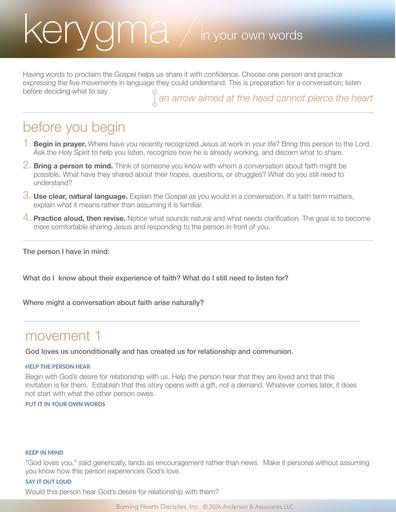
A practice worksheet to help you proclaim the Gospel clearly and personally. Use it when you understand the kerygma but struggle to find natural words for sharing it with someone you know.
From: Burning Hearts Disciples
This four-page guide walks through five movements of the kerygma, with space to express each in your own words. Begin by bringing one person to mind and considering their experiences, questions, and openness to faith. Prompts help you keep Jesus at the center, explain unfamiliar language, and offer an invitation the person can freely answer.
The guide also includes suggestions for responding when someone says yes, hesitates, needs time, or declines, along with opportunities to practice aloud, receive feedback, and bring the experience to prayer.
Why we recommend it:
Knowing the Gospel and finding words to share it are different steps. This worksheet helps leaders, catechists, and everyday Catholics become more comfortable naming what Jesus has done and inviting a response within a real relationship.
Use it for personal preparation, partner practice, catechist formation, or a parish leadership gathering. Practicing the whole proclamation builds familiarity; listening and discernment help you recognize what to share in an actual conversation.
Explore the kerygma
Find the Gospel proclamation, personal reflection, and resources for sharing Jesus with others.
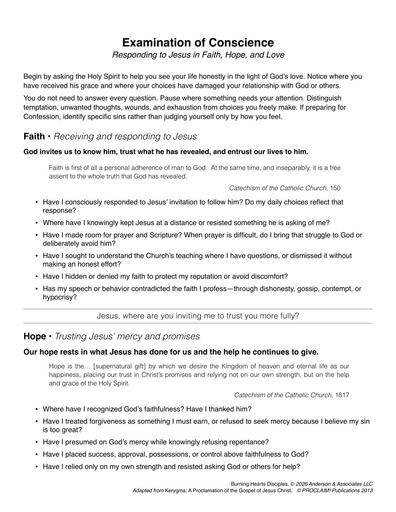
A prayerful examination of conscience to help you recognize how you are responding to Jesus in faith, hope, and love. Use it for personal reflection after hearing the Gospel, during a retreat, or in preparation for Confession.
From: Burning Hearts Disciples
Adapted from Kerygma: A Proclamation of the Gospel of Jesus Christ by PROCLAIM! Publications, this guide draws on the Catechism’s teaching on faith, hope, and charity. Questions invite you to examine your trust in Jesus, your willingness to receive his mercy, and the ways you love God and the people entrusted to your care.
The guide begins with gratitude for God’s grace and helps you distinguish wounds, exhaustion, and unwanted thoughts from sinful choices. It concludes with time to acknowledge specific sins, recognize an invitation to change, and ask for the help you need to respond.
Why we recommend it:
Receiving the Gospel includes allowing Jesus to touch the choices and relationships of daily life. This examination provides a concrete way to bring those places to prayer, with honesty about sin and confidence in God’s mercy.
Use it during personal prayer, Adoration, or a retreat that includes an opportunity for Confession. In a group setting, allow time for private reflection without expecting participants to share their answers. Pause where a question needs attention rather than trying to complete every item.
Explore the kerygma
Find the Gospel proclamation, personal reflection, and resources for sharing Jesus with others.
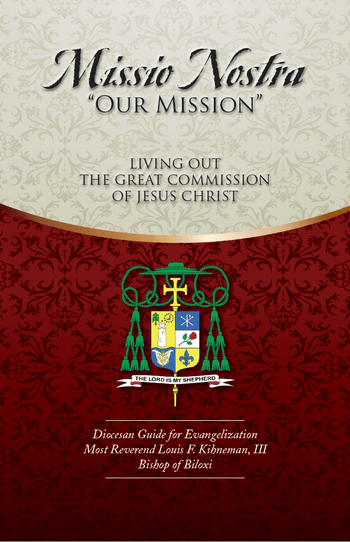
By Bishop Louis Kihneman
Bishop Kihneman wrote Missio Nostra to serve as a guide to help all the parishes, schools, families and minsitries in the Diocese of Biloxi make the "shift from maintenance to answering the Great Commission of Jesus." It is a practical guide that takes the time to explain and define foundational concepts, provides practical suggestions and recommendations for implementation, and encourages all Catholics to reflect on how they can better live out the Great Commission in their personal lives & families as well as in their schools, parishes, and ministries. It is available in English, Spanish, French and Vietnamese.
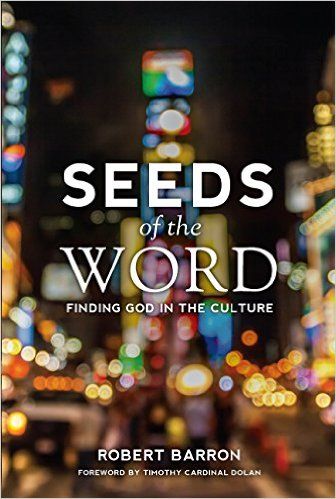
By Bishop Robert Barron
In Seeds of the Word, Bishop Robert Barron explores how God’s truth, goodness, and beauty are reflected in the culture around us — in films, books, music, and everyday life. Drawing on the early Church Fathers’ idea of “seeds of the Word” scattered throughout creation, Barron demonstrates how popular stories can serve as entry points to deeper conversations about the Gospel.
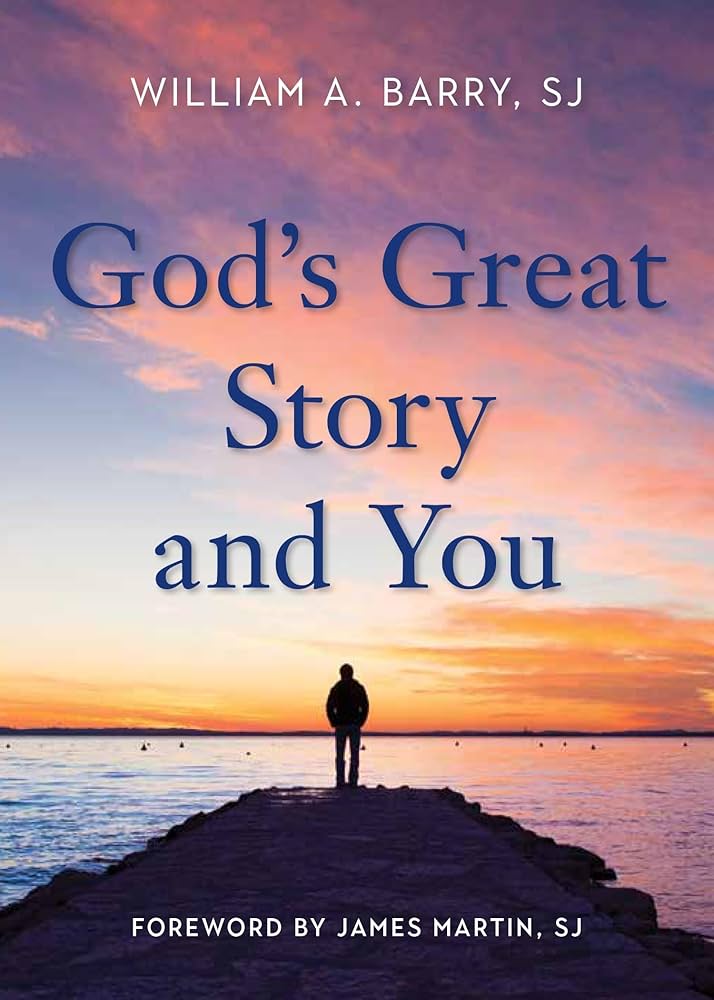
By William A Barry, SJ
In God’s Great Story and You, Jesuit spiritual director William Barry invites readers to see their lives as part of God’s larger story of love and salvation. Drawing on Scripture, Ignatian spirituality, and everyday experience, he shows how God’s story is not abstract history but an ongoing relationship that includes each one of us. Barry helps readers reflect on their personal experiences of grace and connect them to the broader narrative of God’s work in the world.