
What does it means to be a true disciple of Jesus? Lent is the perfect time to quiet ourselves, to listen to the voice of the shepherd, and to deepen our personal relationship with God. During this two night event, our speaker Kristen Bird will help us to tune into the voice of the shepherd, to become better disciples, and discern how each of us can best live out our unique calling to share the love of God with the world. Join the parish mission to renew your spirit and reunite as a blessed community of faith. All ages are welcome!
Read more at the St Mary of the Annunciation website.
Below you will find a list of the resource suggestions for this Parish Mission - both those that were availalbe at the resource table and those mentioned by the speaker. These can be great tools to help you continue to grow in faith after the mission.
Share Your Story! Tell us about your experience of the mission!
Day 1: Experiencing the Kerygma - The Core Gospel Message
The first day of the mission was focused on what it means to be a disciple who encounters the Core Gospel message and the person of Jesus in a life-changing way. Learn more about the Kerygma and use these resources to dive into this aposotolic proclamation of the Good News of Jesus Christ so that this foundational message can take root in your own heart.
 Disicpleship begins when "adult persons at last have the occasion to hear the kerygma, renew their own baptism, consciously choose Christ as their own personal Lord and Savior and commit themselves actively in the life of their Church." (Fr. Raniero Cantalamessa: Christ Yesterday and Today)
-
Session I: Mission & Catholic Identity
Why does the Church exist, and how does that mission shape our lives? This session explored our baptismal call to share Jesus Christ with others, the personal response involved in following Him, and the kind of parish life that helps us live that mission in our families, workplaces, and communities.

Session Handouts & Slides
The Church’s Mission Is Our Mission
These readings ground the session’s central question: how does the Church’s mission shape the way we live and serve?
“She exists in order to evangelize.”
Pope St. Paul VI, Evangelii Nuntiandi, 14

Evangelii Nuntiandi: On Evangelization in the Modern World
Pope St. Paul VI
The Church document quoted during the session. Begin with paragraph 14 on the Church’s deepest identity, then read paragraphs 21–24 on the relationship between the witness of our lives, explicitly proclaiming Jesus, and a person’s response to the Gospel.
Scripture for prayer: Matthew 28:16–20, the Great Commission discussed during the session. Read the whole passage and consider where Jesus is sending you in your ordinary life.
Further Church teaching: Evangelii Gaudium, paragraphs 119–121, develops the baptismal call discussed in the session. Every baptized person participates in evangelization, including those who are still learning and growing in faith.
Following Jesus & Making Disciples
These resources explore the personal response to Jesus and the parish community that helps us keep growing and live our mission.

Forming Intentional Disciples: The Path to Knowing and Following Jesus
Sherry A. Weddell
The book explicitly mentioned in the talk and the source behind the “It Should Be Normal” discussion. It explores personal faith in Jesus, charisms, vocation, fellowship, and how parish life can support intentional discipleship.
What Is a Disciple?
Kristin Bird • Burning Hearts Disciples
A direct follow-up to the session’s vocabulary discussion. It explores discipleship as an active response to Jesus and addresses the assumption that following Him is reserved for unusually holy or exceptionally knowledgeable Catholics.
Returning to Your Why
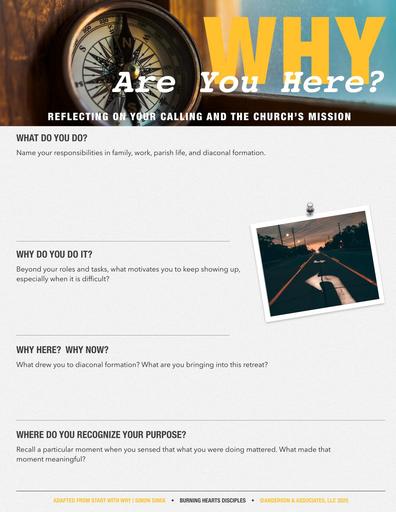
Return to the questions in your retreat handout about why you serve, where you recognize purpose, and what makes that purpose harder to keep in view.

Start with Why: How Great Leaders Inspire Everyone to Take Action
Simon Sinek
The framework credited in the slides and adapted in the handout. Sinek distinguishes what we do from the purpose behind it. In this retreat, that question becomes a reflection on our calling and how it serves the mission Jesus has entrusted to His Church.
Prefer Video? Watch How Great Leaders Inspire Action, Simon Sinek’s TED talk - an introduction to the Start with Why framework.
Additional Reading from Burning Hearts Disciples
These articles extend the session’s questions about mission, parish life, and the daily habits that shape how we serve.
Parish Leadership & Evangelization Priorities: Are We Focused on the Mission?
Kristin Bird • Burning Hearts Disciples
Two parish experiences raise the question asked throughout Session I: do our decisions and use of time serve the mission to make disciples? Includes questions about equipping every baptized person to share Jesus beyond the parish walls.

Mission and Ministry: Making Disciples Inside AND Outside the Walls
Kristin Bird • Burning Hearts Disciples
Explores how caring for and forming people within the parish supports outreach beyond it. A useful continuation of the discussion about the parish as a community that helps the baptized live their mission in daily life.
Related Reflection Tools
Find Your Why — The general Burning Hearts reflection tool for reconnecting daily responsibilities with purpose. Use the adapted Why Are You Here? pages in your Session I packet to revisit the retreat exercise; this general version can support a later conversation with others.
What’s the Difference: Maintenance vs. Mission — A comparison handout for considering how a missionary focus changes ordinary parish practices. Use it to continue reflecting on whether our activity serves the mission.
-
Sessions II - IV: Proclaiming, Responding to & Sharing the Kerygma
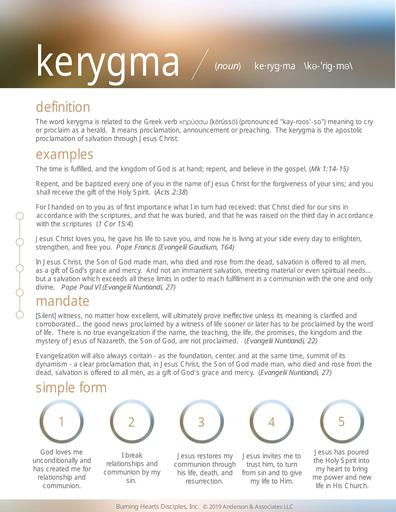
We spent time receiving the Gospel personally: God’s love, the communion broken by sin, what Jesus has done to restore us, His invitation to respond, and the new life He gives through the Holy Spirit in His Church. These resources offer ways to return to that experience in prayer and begin finding words to share it with others.
Retreat Handouts & Slides
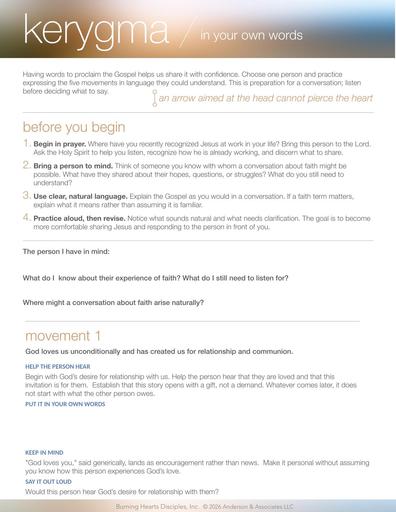
Kerygma in Your Own Words
Burning Hearts Disciples
Express the five movements in natural language, practice aloud, and prepare an invitation the person can freely answer. In an actual conversation, listen and adapt.
Hearing & Receiving the Gospel Again
Return to the proclamation with room to receive it personally. What is Jesus inviting you to today?
“On the lips of the catechist the first proclamation must ring out over and over: 'Jesus Christ loves you; he gave his life to save you; and now he is living at your side every day to enlighten, strengthen and free you.'”
Pope Francis, Evangelii Gaudium, 164

Evangelii Gaudium: The Joy of the Gospel
Pope Francis
The Church document quoted during the session. Begin with paragraphs 164–165 on the kerygma: why the proclamation of Jesus’ saving love remains central throughout Christian formation, and how we share it with joy, patience, and respect for each person’s freedom. Paragraphs 169–173 explore the personal accompaniment that supports a continuing response to Jesus.
Encounter the Gospel
Burning Hearts Disciples
A personal proclamation with space to pause and respond to Jesus in prayer. Use it to return to the invitation you recognized during the retreat, especially where you are still learning to receive God’s love or entrust part of your life to Him.

Proclaiming the Kerygma
Fr. John Riccardo
An example of the Gospel proclaimed with clarity and urgency. This forty-five-minute video can support personal prayer or help you hear another way of announcing what Jesus has done and inviting a response. Allow time afterward for silence and reflection.

The Rescue Project
ACTS XXIX
A sustained experience of Gospel proclamation, conversation, and prayer. Mentioned during the talk as another way of articulating the Gospel, this series can help adults receive the message personally in a small group.
Related reflection handout: Living as Missionary Disciples: Encounter Reflection offers questions for personal prayer or a later conversation about how you have encountered and responded to Jesus.
Additional participant guide: The Kerygma Experience Participant Guide, from the Diocese of Green Bay, offers Scripture and reflection questions for returning to the movements of the Gospel. This is a supplementary resource for continued prayer.
Responding in Prayer
Keep returning to the places where Jesus invited you to trust Him, turn from sin, or surrender something you have been carrying.
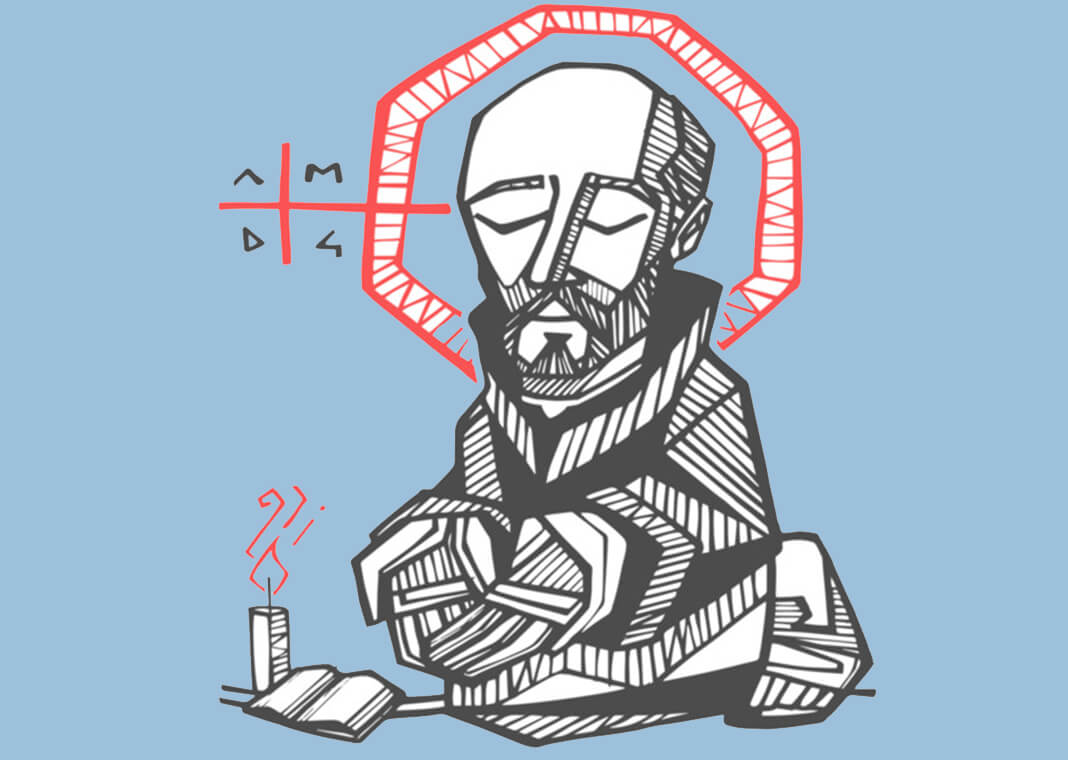
Suscipe: Take, Lord, and Receive
St. Ignatius of Loyola • IgnatianSpirituality.com
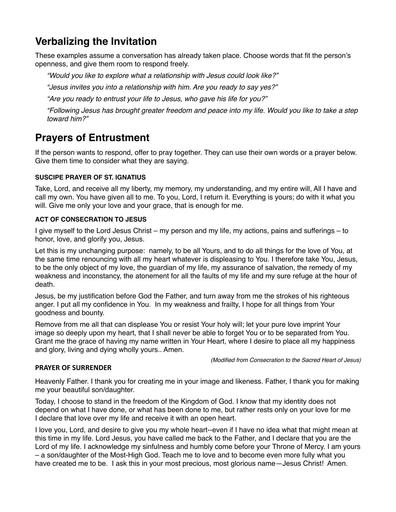
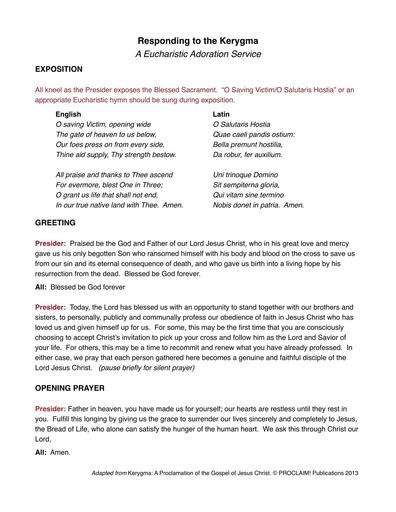
The prayer used in the guided surrender exercise and included in the Adoration handout. This reflection explains its setting in the Spiritual Exercises and its invitation to offer ourselves freely in response to God’s love.
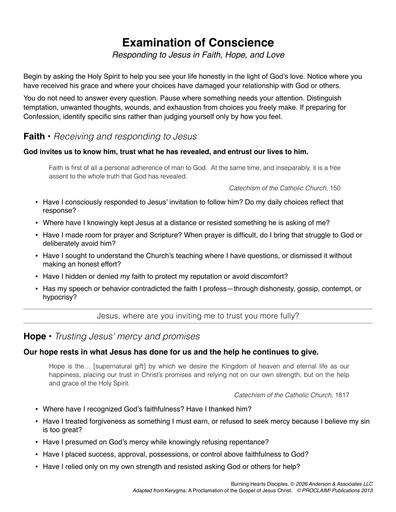
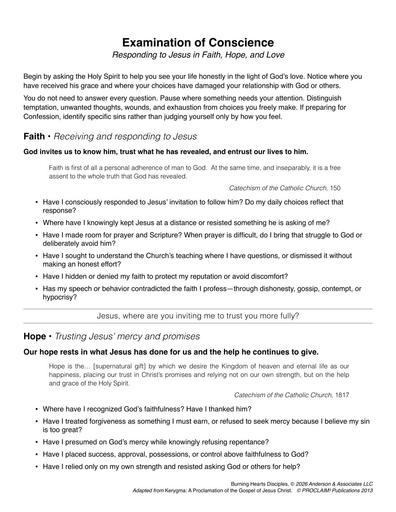
Examination of Conscience: Responding to Jesus in Faith, Hope, and Love
Burning Hearts Disciples • adapted from PROCLAIM! Publications
The reflection offered after the kerygma experience. Begin with gratitude for grace, then consider the choices Jesus is inviting you to change. Use it in personal prayer, Adoration, or preparation for Confession.
The Holy Spirit Gives New Life
Jesus gives us the Holy Spirit to help us live as disciples and share His mission. Continue praying about where that new life is already present and where it may overflow to others.
Come, Holy Spirit: The Prayer That Closed Our Session
Pope St. John Paul II • Pentecost Vigil, May 30, 1998
The closing prayer comes from paragraph 9 of John Paul II’s address to ecclesial movements and new communities. It asks the Holy Spirit to make His gifts fruitful and renew our courage, commitment, and love for the Church.

A Pentecost People
Kristin Bird • Burning Hearts Disciples
A reflection on formation, readiness, and trusting the Holy Spirit. It continues the retreat’s question about how we cooperate with God’s work and allow Him to lead us into mission.

The Wild Goose
Fr. Dave Pivonka, TOR
A video series for continued reflection on the Holy Spirit’s presence and action. A useful next resource if the fifth movement left you wanting to become more attentive and responsive to Him.
Further Church teaching: Catechism, 1302–1305, on Confirmation’s outpouring of the Holy Spirit, deepening of baptismal grace, and strength for witness.
Finding Words to Share the Gospel
Begin with one real person. Listen to what they share, pray for them, and let their questions and openness shape the conversation.

The Ultimate Relationship
Catholic Christian Outreach
The short Gospel booklet named in the sharing slides. It can support a personal conversation with someone open to hearing more about Jesus. CCO’s training videos demonstrate how to use it while leaving room for questions and a free response.
For a shared starting point: The Kerygma Defined summarizes the proclamation and offers Scripture, Church teaching, and reflection questions. The online definition can help you review what makes the proclamation clear and personal.
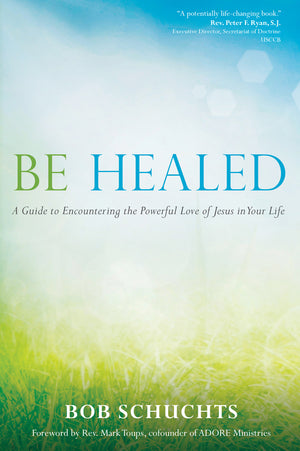
Be Healed: A Guide to Encountering the Powerful Love of Jesus in Your Life
Dr. Bob Schuchts
A companion for continuing the session’s prayer about wounds, forgiveness, and freedom in Jesus. Drawing on his own story, Scripture, and the Church’s sacramental life, Schuchts invites readers to recognize their need for healing and become more receptive to Christ’s love. Includes questions for personal reflection and prayer.

The Garden, the Curtain and the Cross
Carl Laferton • Illustrated by Catalina Echeverri
An illustrated proclamation of the Gospel for children, tracing the story from Eden through sin and separation to Jesus’ death, resurrection, and God’s new creation. A useful tool for parents, grandparents, and catechists who want to share why Jesus came and what He has done for us. Read it together, pausing for questions and conversation.
Additional Reading from Burning Hearts Disciples
The Kerygma: The Gospel Proclaimed Simply
Burning Hearts Disciples
Return to the heart of the Gospel and explore resources for receiving and sharing it. The Kerygma Hub brings together opportunities for personal prayer, explanations of the core proclamation, and practical tools for sharing Jesus with adults, children, and teens.

Lent and the Kerygma: Why the Gospel Must Be Clearly Proclaimed in Catholic Parishes
Burning Hearts Team
Why familiar Catholic language and participation can coexist with an unheard Gospel. Although written for Lent, its central question applies throughout the year: where are people hearing Jesus clearly proclaimed and receiving an invitation to respond?
Kerygmatic Proclamation of Jesus Christ
Michael Steier • USCCB, reproduced with permission
Connects Peter’s proclamation in Acts 2 with the witness of evangelizers today. It explores the importance of knowing Jesus personally, speaking credibly, and respecting the listener’s pace and readiness.
Embracing Everyday Evangelization
Burning Hearts Disciples
A continuation of the sharing slides’ emphasis on ordinary relationships. It explores how Catholics can name Jesus and share their experience of Him in everyday conversations.
Explore the Kerygma Hub or browse resources for adults and small groups for additional proclamation, prayer, and formation tools.
Scripture & Church Teaching for Continued Prayer
These passages return to themes used in the talk, slides, or handouts. Choose one passage and stay with the invitation you recognize there.
- Genesis 1:26–27, Genesis 2:18–25, and Genesis 3: creation, relationship, and the rupture of communion.
- Matthew 11:28–30: Jesus’ invitation to come to Him, quoted in the Adoration service.
- John 14:12–18: Jesus’ promise of the Advocate and His continuing work through His disciples.
- Acts 1:4–8 and Acts 2:1–41: the gift of the Spirit, Peter’s proclamation, and the invitation to respond. The talk also encouraged continued prayer with the whole book of Acts.
- 1 Corinthians 12:3–11: the Spirit’s work in faith and the gifts given for the good of others. Verse 3 appears in the sharing slides.
- Philippians 2:5–11: Christ’s humility, self-giving, and lordship, referenced in the Holy Spirit talk.
- Isaiah 45:2: a verse used in the family’s prayer during the personal witness. Read it in its biblical context as well as reflecting on its personal significance.
“God himself is an eternal exchange of love, Father, Son and Holy Spirit”
Catechism of the Catholic Church, 221 (excerpt)The rest of paragraph 221 speaks of our invitation to share in that exchange. It provides a concise foundation for the first movement’s reflection on the Trinity and communion.
From the examination of conscience: Catechism, 150, on faith; and 1817, 1822, and 1827, on hope and charity.
From the sharing slides: Catechesi Tradendae, 5 and 19–20, on communion with Jesus and the relationship between initial proclamation and catechesis.
Music Used for Reflection
These songs were sung live during the experience. The links below offer recordings or artist resources for returning to them in personal prayer.
- Good Good Father — associated with Chris Tomlin and Pat Barrett; used after the first movement.
- Broken Vessels (Amazing Grace) — Hillsong Worship; used after the second movement.
- Lord, I Need You — Matt Maher; used after the third movement.
- At Your Feet — The Dwell / The Vigil Project; used to open the afternoon session. This link is the official lyric video.
Books, Art & Other Sources Mentioned
- Love and Responsibility — Karol Wojtyła, later Pope St. John Paul II. Mentioned in the reflection on love, self-gift, and treating another person as someone to love rather than use. A deeper philosophical reading, rather than the first follow-up for everyone.
- On the Trinity, Book XV — St. Augustine. Chapters 17–19 offer further reading on the Holy Spirit, love, and gift.
- The Trinity, Andrei Rublev — the icon discussed during the first movement. View the icon and read its background in the “Rublev’s Trinity” section of Smarthistory, or explore the linked State Tretyakov Gallery publication.
- Confessions, Book I, chapter 1 — St. Augustine. The opening prayer in the Adoration handout echoes his reflection on our restless hearts finding rest in God.
- Summa Theologiae, III, question 54, article 4 — St. Thomas Aquinas on why the risen Christ retained His wounds. Read the original alongside the talk’s pastoral reflection on healing and witness.
-
Session V: Discovering Your Story
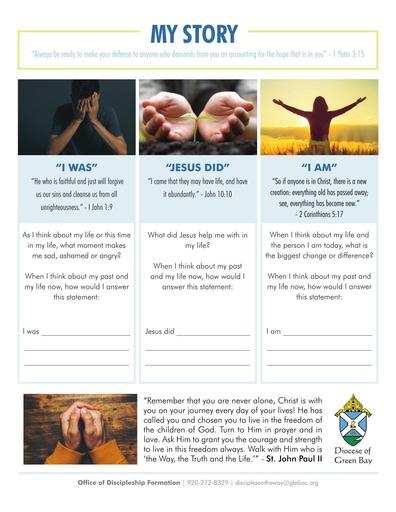
What difference has Jesus made in your life? This session explored how stories reveal truth, help us recognize God’s presence, and open conversations about faith. We practiced remembering a particular encounter and naming what Jesus did, using the simple framework: I was… Jesus did… I am…
Encounter and conversion are connected, but they do not always happen at the same moment. Your story may include a gradual change, a renewed willingness to trust, or a grace you only recognized later. Begin with one experience you can share honestly.
Session Handout & Slides
As you return to your story: Be concrete about what Jesus did. “I went to Confession” names an action you took; describe the forgiveness, freedom, or change Jesus brought through that encounter. Share details appropriate to the person and setting. Your witness can help someone recognize the Gospel’s meaning, while the saving story of Jesus remains at the center.
“Always be ready to give an explanation to anyone who asks you for a reason for your hope, but do it with gentleness and reverence.” 1 Peter 3:15–16

The Power of Story: Sharing Your Faith Through Story
Burning Hearts Disciples
Explore ways to recognize what Jesus has done in your life and share it with others. The Power of Story Hub gathers reflection guides, articles, videos, and examples to help you discover your story, put it into words, and share it naturally in everyday relationships.
Continue Discovering & Sharing Your Story
These follow-up resources can help you recognize a story, put it into words, and practice sharing it.

Why So Many Catholics Think They Don’t Have a Story
Kristin Bird • Burning Hearts Disciples
A strong place to begin if you think your experience is too ordinary to count. This reflection invites you to notice grace already present in your life and to remember what Jesus has done, including changes that unfolded slowly.
Interview: Sharing Your Faith by Sharing Your Story
Kristin Bird • Franciscan Sisters of Christian Charity
A follow-up conversation using the same “I was… Jesus did… Now I am…” framework practiced at the retreat. Helpful for connecting a personal experience of Jesus with an ordinary conversation about faith.

Sharing Your Testimony — Missionary Disciple Podcast
Catholic Christian Outreach • Season 2, Episode 24
Practical coaching for moving from reflection to speaking aloud. The episode explores a simple testimony structure, the place of a personal response to Jesus, and ways to adapt the length and detail of your story to the conversation.
Related Reflection Handouts
These are additional tools for continued prayer and practice.
- Discovering Your Story — Begin with reflection on where God has been present in your life.
- Unpacking Your Story — Continue shaping an experience of faith into a story you can share.
- My Story Framework — The simple framework used during the session.
Explore the Power of Story Hub →
Recognizing Truth in the Stories Around Us
The session began with familiar stories because films, books, and other cultural experiences can help us recognize a longing, a wound, or a glimpse of grace.
Finding God in the Stories Around Us
Kristin Bird • Burning Hearts Disciples
The closest companion to the opening discussion, including Inside Out, Les Misérables, Iron Man’s story, and Subnautica. Offers questions for noticing goodness, wounds, longing, and grace in the stories people already love.

Unleashing the Power of Story: Using Stories to Evangelize
Kristin Bird • Burning Hearts Disciples
Revisits the opening Truth-and-Story parable and develops the session’s discussion of personal experience, credibility, and witness. Includes practical suggestions for recognizing God’s work and speaking about it in everyday relationships.
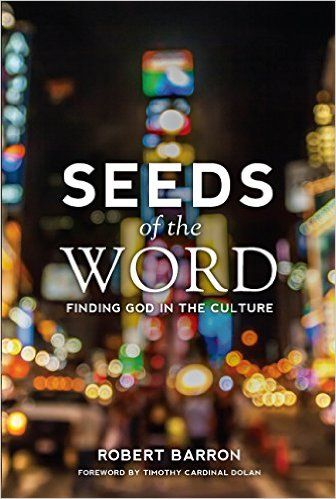
Seeds of the Word: Finding God in the Culture
Bishop Robert Barron
Suggested further reading: reflections on finding openings toward faith in films, literature, and popular culture. A companion for practicing the Gospel lens used in the session’s opening discussion; this book was not explicitly named in the supplied recordings.
Church Teaching on Personal Witness
“The light of faith is linked to concrete life-stories” Pope Francis, Lumen Fidei, 12
Evangelii Gaudium: The Joy of the Gospel
Pope Francis
Read paragraph 128 on listening before speaking and sharing the Gospel humbly; paragraph 164 on the kerygma at the heart of our witness; and paragraphs 264–266 on the love and personal experience of Jesus that sustain evangelization.
Lumen Fidei, 12 connects faith with remembering God’s deeds and passing them from one generation to the next. It offers a foundation for the session’s reflection on family stories and the witness we hand on.
Catechesi Tradendae, 5 names communion and intimacy with Jesus Christ as the aim of catechesis. This slide reference keeps relationship with Jesus at the center as we learn to share our faith.
Scripture for Continued Prayer
- 1 Peter 3:15–16 — Give a reason for your hope with gentleness and reverence.
- Matthew 13:34 — Jesus teaches through parables.
- 2 Corinthians 5:17 — New life in Christ.
- 1 John 1:9 — Bring sin honestly before God and receive forgiveness.
- John 10:10 — The abundant life Jesus offers.
- Matthew 11:28 — Bring your burdens to Jesus.
- Psalm 34 — The Lord’s nearness to the brokenhearted. The handout uses verse 18; in the NABRE text linked here, that line is verse 19.
- Mark 10:51 — Bring a specific need to Jesus.
- 1 Peter 5:10 — Hope in God’s restoring grace amid suffering.
Choose one passage. Where do you recognize its movement in your own life? What grace can you thank Jesus for, or ask Him to give?
Sources & Music Mentioned or Used
- “Listen” — Laura Huval and Sarah Hart. Laura’s song at the beginning of the second supplied recording invites quiet attention to God. Song information and resources →
- Benedict XVI’s interview with Fr. Jacques Servais, SJ. The source for the reflection on faith, listening, and the witnesses through whom God becomes accessible to us. The interview was prepared for an October 2015 conference and published in 2016. Read the English translation →
- “Naked Truth and Resplendent Parable.” The opening Yiddish folktale is listed in Yiddish Folktales, edited by Beatrice Silverman Weinreich and translated by Leonard Wolf, the collection credited in the slide notes. View the collection and table of contents →
- St. John Paul II’s World Youth Day vigil address, August 23, 1997. Source of the encouragement printed on the front of the handout about Christ’s presence and the freedom of God’s children. Read the address →
- Benedict XVI’s Angelus, July 1, 2012. Source of the handout’s closing reflection on asking for healing, firmer faith, and trust in God’s providence. Read the reflection →
Cultural Stories Discussed
Inside Out, Iron Man’s story across the Marvel films, Les Misérables, and Subnautica to explore emotional honesty, conversion, mercy, beauty, and grief. Twilight, RoboCop, and The Walking Dead also appeared as examples of conversations about faith prompted by popular culture. Note: These were illustrations used in the talk, rather than a recommended viewing or reading list.
-
Sessions VI & VII: Listening & the Art of Accompaniment
Listening and accompaniment belong together. We begin by receiving a person’s story with prayerful attention, noticing where God may already be at work. From there, we discern how to walk alongside them, share the Gospel, and invite a next step toward Jesus.
These sessions explored listening to the other person, the Holy Spirit, and ourselves; the Emmaus pattern of accompaniment; and the continuing journey of conversion. The resources below support that practice in family life, parish ministry, and everyday relationships.
Session Handouts & Slides
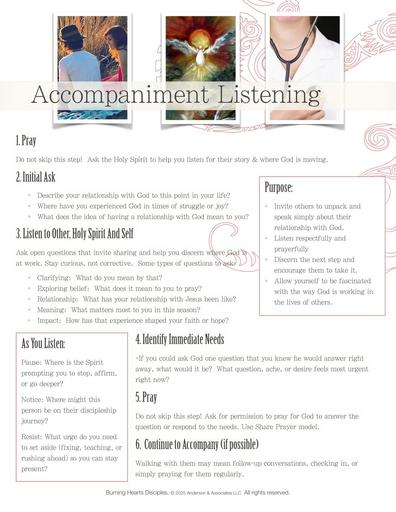
Accompaniment Listening: Opening questions and practical guidance for receiving someone’s story, recognizing immediate needs, and offering prayer. The second page, After Listening: What Next?, connects listening with Gospel proclamation, personal witness, invitation, and continued accompaniment.
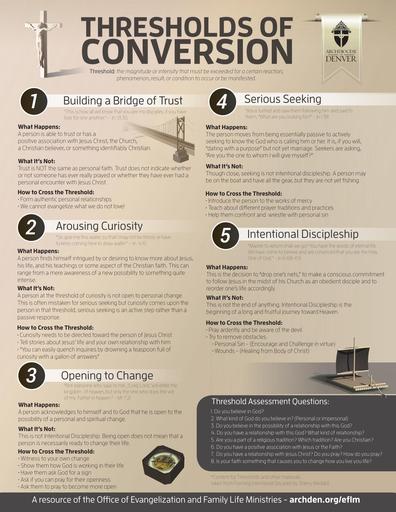
Thresholds of Conversion: A reference guide to the thresholds of conversion and ongoing growth in discipleship, with questions to help you recognize where someone is on their faith journey and discern how to accompany them. Includes reflection on the relationship between Gospel proclamation and catechesis.
Listening with an Open Heart
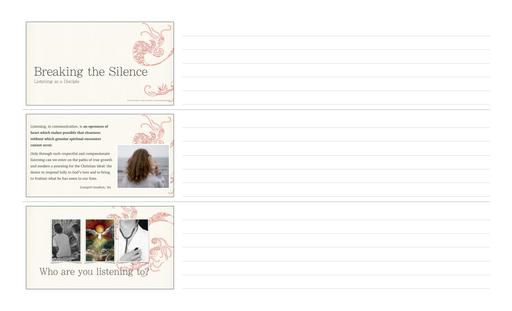
“Listening, in communication, is an openness of heart which makes possible that closeness without which genuine spiritual encounter cannot occur.”
Pope Francis, Evangelii Gaudium, 171Receive the person’s story while remaining attentive to the Holy Spirit and to your own reactions. Notice the urge to correct, fix, compare, or rush ahead. Ask open questions that help you understand what familiar words and labels mean in this person’s life.
Returning to the listening exercise: Invite someone to share an experience of God’s work in their life. Listen for the story and notice when you want to interrupt. The retreat’s complete-silence rule was a training exercise to make those impulses noticeable. In ordinary conversation, respond naturally and ask respectful questions that help the person continue.
Evangelii Gaudium: The Joy of the Gospel
Pope Francis
The Church document recommended and quoted throughout both sessions. Begin with paragraphs 169–173 on accompaniment, listening, patience, and growth. Paragraph 128 places personal dialogue before sharing the Gospel; paragraph 165 describes an approach that fosters openness; paragraphs 281–283 explore intercession. Paragraph 266 returns us to the personal experience of Jesus that sustains evangelization.

The Threshold Podcast
Tony Vasinda & Fr. Colin Parrish
Conversations with Catholics, other Christians, atheists, and people of different faith backgrounds about what they believe, what shaped those beliefs, and why it matters. Listen for how open questions and patient attention allow a person’s story to emerge. A practical companion to the invitation to hear the story beneath a label.
Walking with Others Toward Jesus
Pray with Luke 24:13–35, the passage behind Burning Hearts’ Emmaus Framework for Accompaniment:
- Draw near to them. Enter their world and build a relationship of trust.
- Listen as a disciple. Receive their story and attend to God’s work within it.
- Share the Story. Proclaim Jesus and His saving work; share personal witness when it serves the conversation.
- Invite them to recognize Christ. Help them notice His presence and respond to His invitation.
- Entrust them to the Holy Spirit. Continue in prayer and remain available for the part of the journey you are given.
The next step needs to fit the person’s actual readiness and circumstances. Sometimes accompaniment unfolds over many years; sometimes we are given one conversation. We can be faithful in either setting while trusting God with the work we cannot see.
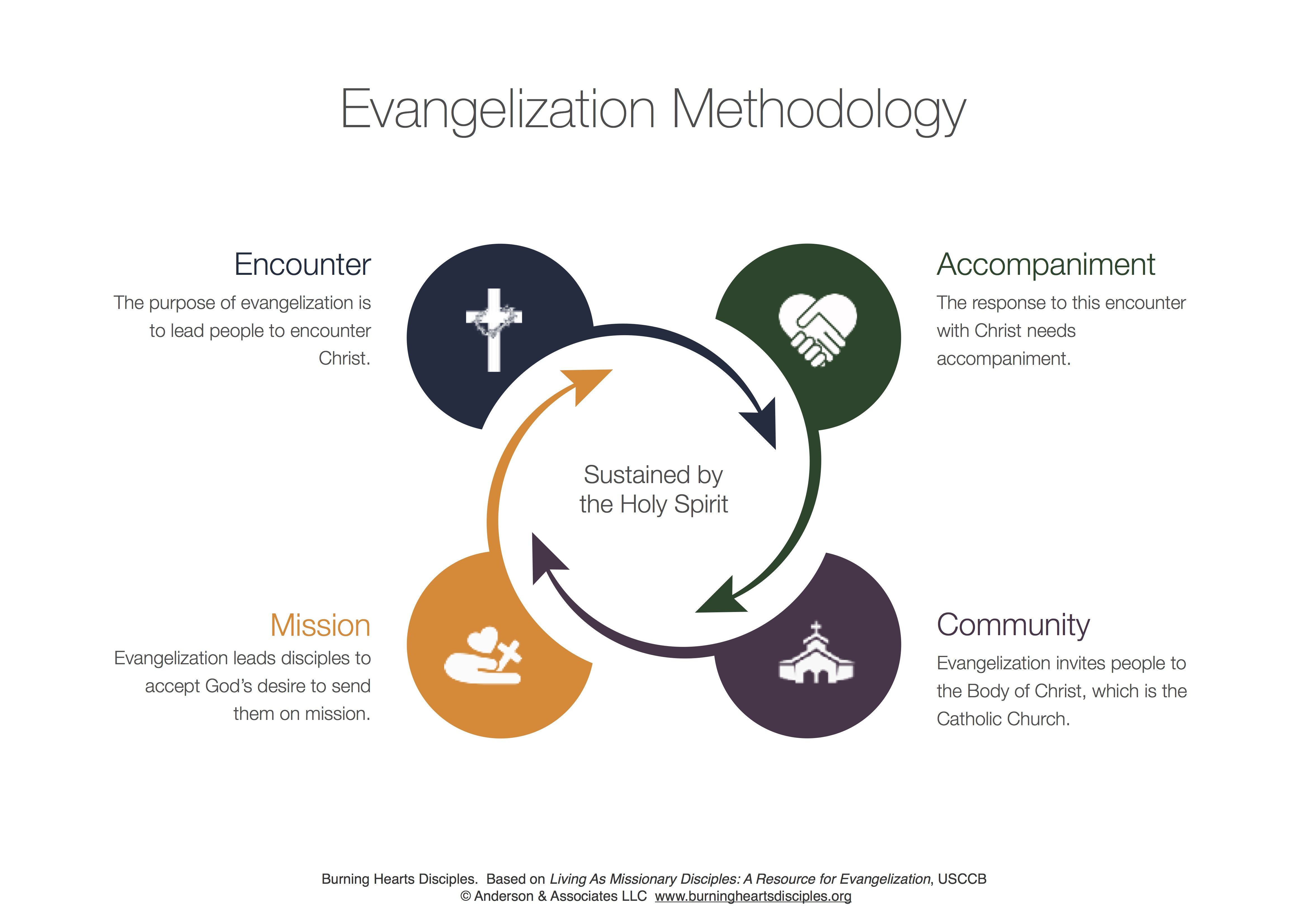
Living as Missionary Disciples: A Resource for Evangelization
Burning Hearts Disciples • Drawing on the USCCB resource
Explore the four movements discussed during the retreat: encounter, accompaniment, community, and mission. This guide brings together excerpts from the U.S. bishops’ resource, reflections, and practical tools for supporting the continuing discipleship journey in your own life and parish.
Understanding the Journey of Conversion
The thresholds help us listen for trust, curiosity, openness, seeking, and a personal decision to follow Jesus. They support discernment about an appropriate next step. They do not tell us everything about someone’s life with God, and a person’s story may change our first impressions.
The encounter–accompany–community–send pattern describes continuing formation and mission. The retreat presented it as a recurring spiral: being sent can lead to fresh encounter, deeper response, and renewed need for accompaniment.
Forming Intentional Disciples: The Path to Knowing and Following Jesus
Sherry A. Weddell
The book named in the talk and source of the spiral-of-silence discussion. It explores the assumptions Catholics make about one another’s faith, the importance of asking about lived experience, and the thresholds through which people move toward intentional discipleship.
For more on people’s accounts of coming to faith to explore trust, curiosity, openness, seeking, and commitment, check out I Once Was Lost.

Clear & Simple: How to Have Conversations That Lead to Conversion
André Regnier
A practical guide to intentional spiritual conversations, drawing on Regnier’s experience with Catholic Christian Outreach. Explores conversion and offers an adaptable approach to helping someone hear the Gospel and respond personally to Jesus. A useful companion to the thresholds framework when discerning how to move from listening toward an invitation.
Apostles vs. Disciples: Nurturing the Full Discipleship Journey
Kristin Bird • Burning Hearts Disciples
Explores why participation in parish life does not tell us everything about a person’s discipleship. Encourages deeper conversations, personal reflection, and accompaniment that supports continued growth in relationship with Jesus and participation in His mission.
Additional Reading from Burning Hearts Disciples
These articles apply the sessions’ themes to the conversations and responsibilities we already carry.

Christian Accompaniment When Someone Is Struggling
Kristin Bird • Burning Hearts Disciples
A close follow-up to the session’s discussion of the urge to fix. Considers how slowing down, attending to ordinary human needs, and asking grounded questions can help someone remain open when another explanation or suggestion would overwhelm them.
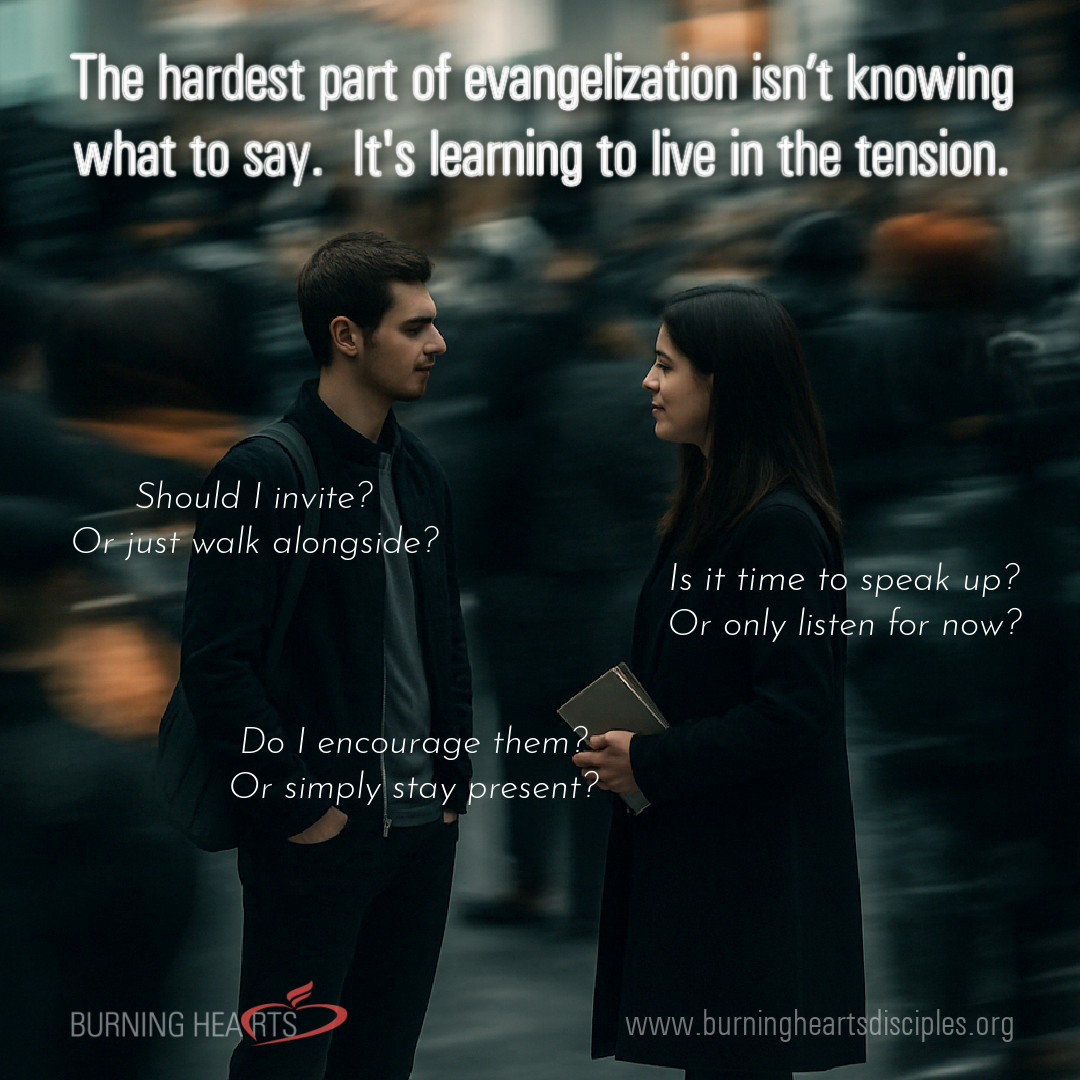
Holding the Tension in Evangelization
Kristin Bird • Burning Hearts Disciples
Explores the discernment involved in deciding whether to speak, listen, offer prayer, or remain present. A useful continuation of the handout’s “What Next?” page, keeping both patience and a willingness to name Jesus within an ongoing relationship.

Accompaniment After Retreats, Summer Camps & Mission Trips
Kristin Bird • Burning Hearts Disciples
Develops the session’s distinction between an encounter and the continuing conversion that needs support afterward. Offers concrete questions for receiving a person’s experience and helping them carry it into ordinary life.
Mission and Ministry: Making Disciples Inside AND Outside the Walls
Kristin Bird • Burning Hearts Disciples
Extends the discussion of the parts of the discipleship journey parishes tend to support well and those needing more attention. Considers how formation and community sustain relationships and witness beyond parish activities.
More on Trust, Church Teaching & Formation
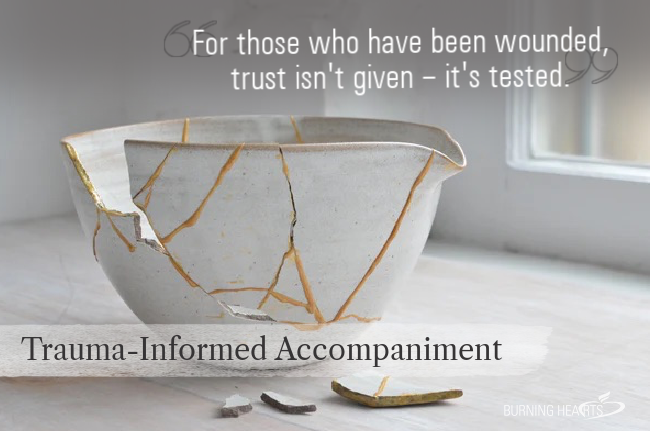 When Trust Has Been Broken: Trauma-Informed Accompaniment — Cathy Lins on honoring boundaries and allowing trust to grow when someone has been hurt.
 The Popes on the Art of Accompaniment — A collection of Church teaching on walking with others toward Christ.
-
Living the Faith: Accompaniment — A concise reflection adapted from the USCCB resource, with personal and parish questions.
-
A Pentecost People — Trust in the Holy Spirit and formation that includes participation in mission.
Prayer & Further Resources
SHARE Prayer: A Quick Guide to Intercessory Prayer
Burning Hearts Disciples
The prayer model explicitly named in the handout. A practical aid for offering a brief prayer with someone in response to the needs they have shared. Ask permission first and keep the prayer attentive to the person’s actual concerns.
Accompaniment in Action
Burning Hearts Disciples
Continue exploring the art of accompaniment through articles, examples, and practical tools for listening, discernment, prayer, and walking with others toward Christ.

The Story of Our Lady of Champion
The National Shrine of Our Lady of Champion
The story shared during the session. Adele’s willingness to travel to families and help with household work made space for children to learn the faith. Read the Shrine’s account as a concrete example of service, perseverance, and attention to people’s actual circumstances.
Prayer to Our Lady of Champion offers a longer prayer for continued reflection. Session VII closed with the invocation: Our Lady of Champion, pray for us. The Shrine’s educational resources develop Adele’s teaching mission.
Trust in You
Lauren Daigle • Written by Lauren Daigle, Michael Farren, and Paul Mabury
Sung by Laura at the opening of Session VI. A prayerful companion to the invitation to release control and trust God, including when answers and outcomes remain uncertain. This link leads to Lauren Daigle’s official recording.
Prayer from the Listening Handout
Come, Holy Spirit.
Teach me to listen with the ears of Christ,
to see with the eyes of Christ,
to speak with the words of Christ,
and to love with the heart of Christ. Amen.Scripture for Continued Prayer
- Luke 24:13–35 — The road to Emmaus. Notice how Jesus draws near, listens, opens the Scriptures, and becomes recognizable.
- 1 Thessalonians 2:7–8 — Sharing both the Gospel and our lives with those we accompany.
- Genesis 2:18 — The companionship recalled in the slides.
- John 1:39, Matthew 9:9, John 15:4–6, and Matthew 28:19 — The invitations connected with encounter, accompaniment, community, and sending in the USCCB framework.
Additional Church Documents & Source References
- Evangelii Nuntiandi, 4 and 75 — Fidelity to the Gospel and to the people receiving it, and the indispensable action of the Holy Spirit.
- Deus Caritas Est, 1 — The encounter with Jesus that gives life a new direction.
- Catechism of the Catholic Church, 1767–1770 and 1771–1775 — The place of emotions in the moral life. These passages support awareness of feelings without treating every feeling as a definitive spiritual judgment.
- Catechesi Tradendae, 5 — Communion and intimacy with Jesus as the aim of catechesis.
- Catechism of the Catholic Church, 1503 — Christ’s compassion and healing of the whole person.
- General Directory for Catechesis (1997), 49 — The moments of evangelization discussed on the handout's “Evangelical Gap” page. This is the historical document cited there.
- National Directory for Catechesis, p. 57 — On the need for catechesis to include primary proclamation when conversion has not yet occurred. USCCB overview of the directory →
Art & Other References from the Session
- The Incredulity of Saint Thomas, Caravaggio — Discussed in the talk in connection with Christ’s closeness and vulnerability. Pray with John 20:24–29.
- The Supper at Emmaus, Caravaggio — Named in the slides at the invitation to recognize Christ.
- St. Josemaría Escrivá and guardian angels: The talk mentioned his devotion as a reminder of each person’s dignity before God. Read further about that devotion →
Questions to return to: What in me gets in the way of listening? Who accompanies me? Whom am I accompanying? What next step might serve that person now, and what needs to be entrusted to the Holy Spirit?
-
Session VIII: Living as a Disciple
Before Jesus asks His disciples to wash anyone else’s feet, He kneels before them. This evening reflection invited us to receive His care, recognize the people entrusted to us, and discern how He is forming us to serve. Family life, work, health, and ministry all belong in that discernment.
The evening included a brief reflection, quiet personal prayer, and questions for conversation with your spouse. The Examination of Conscience for Evangelizers was provided the following morning as a companion to this session.
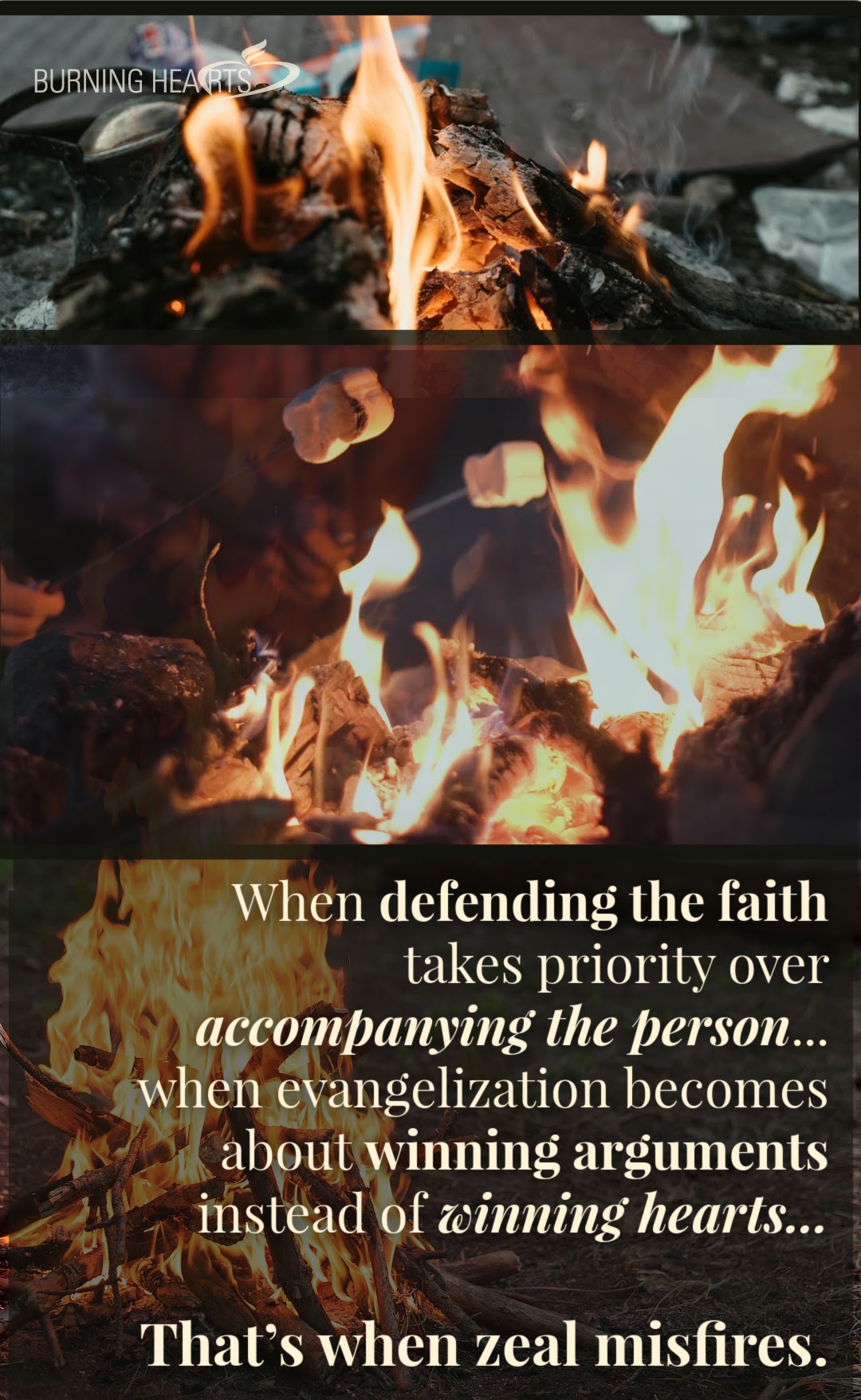
Examination of Conscience for Evangelizers
Burning Hearts Disciples
The handout provided the next morning. Bring your service and your motives before Jesus, noticing where fear, pride, defensiveness, or a desire for control may be shaping your response to others. Return to it slowly in prayer, especially where a question stays with you.
Read the accompanying article: Is Your Zeal Misfiring? Examine Your Heart for Mission. It explores what happens when our desire to defend the faith begins to crowd out compassion and attention to the person.
Letting Jesus Care for You
Return to John 13:1–15, especially verses 3–8 and 12–15, used in the reflection. Notice Peter’s resistance to receiving and Jesus’ invitation to follow His example. Where are you more comfortable offering help than accepting it?
Jesus, help me see how you are forming me to serve.
- Where do I need to let Jesus care for me?
- Who receives my best attention? Who gets what is left over?
- What service do I welcome? What service do I resist?
- Where do I need to listen before offering help?
- What person or responsibility do I want to entrust to Jesus tonight?
These are the personal prayer questions from the slides. Stay with the question that deserves your attention; there is no need to work through every one.
Listening to Each Other
The slides invited couples to make room for each other’s experience of formation and the approaching ordination. Return to these questions when you can give each other your attention.
- What has this season of formation been like for you?
- As ordination approaches, what are your hopes and concerns about serving others?
- What needs our attention so that family life and ministry can be lived faithfully?
Receive what your spouse shares. You do not need to resolve everything tonight.
Discerning What Is Yours to Offer
Service takes the shape of a real person. Ask who is in front of you, what they are carrying, and what is yours to offer now. That may mean giving generously, asking for help, sharing a responsibility, or recognizing a need you cannot meet.

When the Need Is Bigger Than You: Discerning What Is Yours to Do
Kristin Bird • Burning Hearts Disciples
A close companion to the session’s question about responsibility and limits. Beginning with the response to a local tornado, this reflection considers how prayer and charisms help us recognize our particular contribution when the needs exceed what any one person can carry.
Staying Grounded in Ministry: Wisdom for the ‘Pumpkin Spice’ Days
Featuring a reflection by Deacon Mike Eash • Burning Hearts Disciples
A deacon’s perspective on days when demands overwhelm our capacity and make it difficult to attend to the person in front of us. A useful follow-up for considering the pace of ministry and where support is needed.

Prayer & Discernment Hub
Burning Hearts Disciples
Resources for bringing responsibilities to God, listening before deciding, and recognizing what He is asking of you. Includes prayer reflections and tools for discerning what may need to begin, change, or end.
Closing Prayer: Ordering a Life Wisely
St. Thomas Aquinas • Selected passages, with wording adapted from the Latin
We used this prayer at the close of the evening to entrust our lives and service to God. Return to it when discerning what He is asking of you and how to respond faithfully.
Merciful God,
help me to desire deeply,
seek wisely,
recognize truthfully,
and carry out faithfully
whatever is pleasing to you,
for the praise and glory of your name.Set my life in order, my God.
Help me recognize what you are asking of me,
and give me the grace to accomplish it
in the way that is right and good for my soul.Give me a watchful heart
that wandering thoughts cannot draw away from you;
an upright heart
that unworthy intentions cannot lead astray;
a steadfast heart
that hardship cannot overcome;
and a free heart
that disordered desires cannot enslave.Give me understanding to know you,
diligence to seek you,
wisdom to find you,
words that please you,
perseverance in waiting for you,
and confidence in embracing you at last.Amen.
Read the full prayer in English: Archdiocese of Philadelphia (look for “For Ordering a Life Wisely”). The selection above is an adaptation and differs from that translation. View the Latin text and another English translation.
Further Prayer & Reading
Scripture for Continued Prayer
John 13 anchored the session. These additional passages offer further prayer on receiving, serving, and discerning.
- John 13:1–15 — Receive Jesus’ care and consider His example of service.
- Mark 1:35–39 — Jesus prays and continues His mission amid competing demands.
- Luke 10:38–42 — Bring the pressures of service into Jesus’ presence.
- 1 Peter 4:10–11 — Serve with the gifts and strength God supplies.
Church Teaching for Continued Reflection
Suggested further reading, beyond the sources explicitly used during the evening:
- Deus Caritas Est, 7 and 35–37 — Pope Benedict XVI on receiving love, humility in service, human limits, and prayer. Paragraph 35 is especially helpful for entrusting what exceeds our capacity to God.
Before taking up another responsibility, return to Jesus with one person or situation in mind: What are You asking me to offer? Where do I need to receive help? What can I entrust to You?
-
Session IX: Your Next Steps
Where is the Holy Spirit drawing your attention now? This final session invited us to choose one area of life or ministry and discern how to align it more closely with the Church’s mission to evangelize and make disciples. Begin with your own activity, energy, and time. Bring what you discover into conversation with your spouse, family, and those with whom you serve.
Session Handout
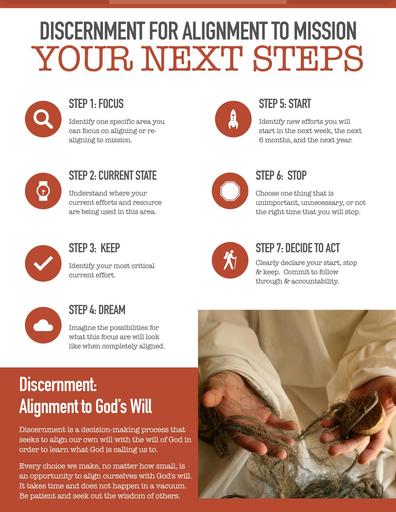
Discernment for Alignment to Mission: Your Next Steps
Burning Hearts Disciples
The seven-step guide used during the session. Choose one focus area, consider its current state, and prayerfully identify what to keep, imagine, start, and stop. Finish with a concrete decision and someone who can help you follow through. Although the questions refer to parish life, the guide also applies to personal commitments and family life.
Pruning & New Growth: Laura Huval’s Opening Reflection
Laura Huval opened with a family story about a cherished plant that needed pruning before new growth could emerge. Her witness invited us to consider what God may be asking us to release, what He is nurturing, and how we can remain faithful while growth takes time.
- The Gardener — Sarah Kroger: the song Laura sang during the opening reflection. This link is Sarah Kroger’s official recording. Return to it alongside John 15:1–8 and Galatians 5:22–23.
- Litany of Growth — Laura Huval: the prayer brochure Laura distributed after her sharing. Use your copy for continued prayer; the linked page offers additional brochures for groups.
Returning to the Discernment Process
Start with one focus. You do not need to evaluate every part of your life or parish at once. Notice where the Holy Spirit is drawing your attention and where you already see life, growth, or a need for change.
- Focus: Identify one specific area to align or realign to mission.
- Current state: Look honestly at the efforts and resources committed to that area. Which are mission critical, important and necessary, unimportant, or unnecessary?
- Keep: Recognize what is fruitful and should continue, including what may need a small adjustment.
- Dream: Imagine what this area could look like when more fully aligned with the mission.
- Start: Choose a tangible new effort and a realistic time frame.
- Stop: Identify what to release or pause so the next faithful step has room to grow.
- Decide to act: Name your commitments and who will help you remain accountable.
Consider planning horizons of next week, six months, one year, and three years. Let the longer view inform one concrete step you can take now.
For prayer: What are You already bringing to life? What needs tending? What needs pruning? Who should help me discern and follow through?
Recognizing the Gifts God Has Given You
Charisms help us recognize how the Holy Spirit works through us for the good of others. Pay attention to recurring fruit, the experience of exercising a gift, and the confirmation of others over time. Bring those observations into prayer and conversation. An inventory begins the process; continued discernment tests what it suggests. Our shared call to prayer, charity, and the works of mercy remains part of Christian life whatever our particular gifts.
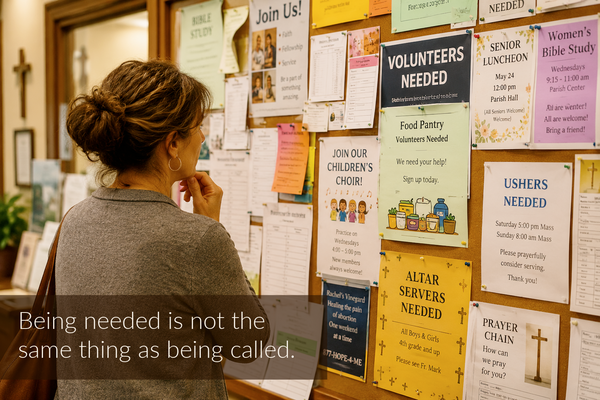
You Already Have Gifts. The Question is Whether You’ve Recognized Them
Kristin Bird • Burning Hearts Disciples
A close follow-up to the discussion of skills, charisms, and saying yes to the service that is yours. Explores how to notice patterns of grace and distinguish a genuine call from simply being available to fill a gap.
Charism Assessment — Many Parts Ministries offers a starting point for exploring the gifts God has given you for the good of others. Bring what you discover into prayer and continued discernment, paying attention to fruit and the confirmation of others over time. Affiliate link.
Charism Discernment Coaching — Burning Hearts Disciples offers accompaniment as you examine how God is working through your gifts and what that means for your next steps.
Continuing in Prayer
Prayer & Discernment Hub
Burning Hearts Disciples
Further reflections and practical tools for listening to the Holy Spirit and allowing prayer to shape decisions. Return here as you work through the guide personally or begin a shared discernment process with a ministry team.
Scripture for Continued Prayer
- John 15:1–8 — Abiding in Jesus, pruning, and bearing fruit: the central images of the opening song and reflection.
- Galatians 5:22–25 — The fruit of the Spirit named in Laura’s introduction and the song.
- 1 Corinthians 12:4–27 — Further prayer on diverse gifts serving the common good within one Body.
- 1 Corinthians 3:5–9 — Further prayer on planting and watering while trusting God to give growth.
Church Teaching on Charisms & Mission
Further reading supporting the session’s themes:
- Catechism, 799–801 — Charisms serve the Church and the needs of the world. Their exercise requires charity and discernment in communion with the Church.
- Evangelii Gaudium, 25–33 and 130–131 — Missionary renewal of Church structures and practices, and the gifts the Holy Spirit gives for the Church’s renewal and building up. This is also the document underlying the evangelizers’ examination provided that morning.
One next step: Name your focus area, bring it to prayer, and arrange a conversation with someone who can help you discern. As clarity emerges, write down what you will keep, start, and stop, and when you will revisit those commitments.




Day 2: Sharing Stories of Faith