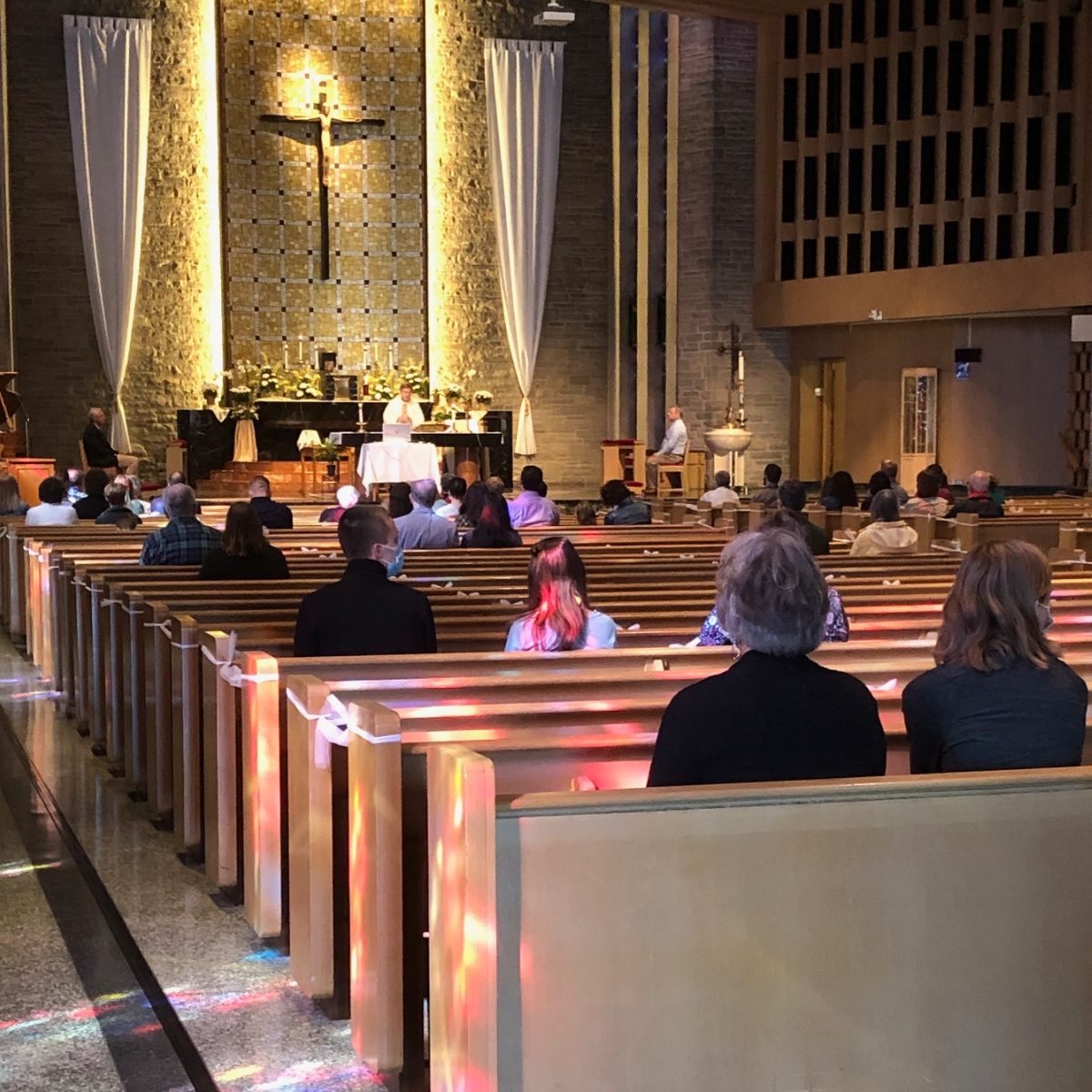
Every October, parishes count the people in the pews. Someone walks the aisles or counts from the back, records the totals and sends them along to the Diocese. Those numbers deserve our attention. Attendance trends tell us something real about a parish's reach and the people gathering for Mass.
Suppose this year's count is up 8 percent. After years of worrying about empty pews, that would be welcome news.
But what does that data actually tell us?
It tells us that more people came to Mass. It doesn't tell us whether more people know Jesus, whether someone has begun to trust him, or whether the Gospel is changing the decisions people make outside the four walls of our church building.
A falling count doesn't answer those questions either. It certainly calls for our attention, but the number alone can't tell us why people are absent or what is happening in those who remain.
We know that for those at Mass, Christ is present and giving himself in the Eucharist. The question is how we are helping people recognize, receive and respond to him. Counting their presence can't tell us that.
Evaluating Parish Ministry Beyond Attendance
Measurement gives us necessary data. Evaluation asks what that data means for the mission entrusted to us.
My grandmother went to daily Mass, prayed the rosary twice a day, and went to confession every week. If you had asked her parish for a list of its committed disciples, she porbably would have been on it. I would have put her there myself.
At a holiday dinner one year, I remember asking her what her relationship with Jesus was like. "I don't have that," she said. "That would be inappropriate. He is God, and I am not."
Now, her answer didn't tell me everything about her life with God. But it did tell me something that all those years of attendance could never have revealed: she understood personal relationship with Jesus as something she shouldn't seek. I would never have known that if I hadn't asked.
Pope Leo's Question: Why?
In his September address to the Diocese of Rome, Pope Leo XIV called this work pastoral evaluation. He said it isn't enough to ask whether an activity is well organized, “whether it is well attended, or whether it has been running for many years.” We have to ask whether it actually leads people to Christ so we can discern what should be “retained, valued, corrected, abandoned or initiated.”
He's encouraging those of us in pastoral ministry to ask the key question: why?
The heart of the method that I am proposing to you is, however, a very simple question: “why?”. It is a matter of pausing together and asking ourselves, for everything we do: why do we do it? What Gospel-inspired intention drives us? What real need are we seeking to meet? In what way does this choice correspond to the mission of the Church?
Then comes the second step: why do we achieve these results and not others? Why do some initiatives foster journeys of faith whilst others remain isolated? Why do some people participate whilst others remain on the sidelines?
That second step is the one that can make a staff meeting uncomfortable.
We can usually explain why we started something. We wanted families to feel connected. We wanted adults to grow in faith. We wanted people to encounter Jesus. The intention was sincere, and people worked hard.
But why did the relationships end when the sessions ended? Why are the same six people carrying every new effort?
Those questions touch work we've given ourselves to. A ministry may carry the memory of a beloved pastor, years of a volunteer's labor, or our own hope that this would finally be the thing that helped. When you’ve given years to a ministry, asking whether it still serves its purpose can feel like being asked whether those years were wasted.
Are People Encountering Jesus?
If we want to know whether people are encountering Jesus, we need opportunities to hear them speak about their lives. Can they talk about him personally, beyond explaining a Church teaching or describing a parish activity? Has anyone begun praying at home, opening Scripture during the week, or bringing a difficult decision to Jesus?
Some people will struggle to put that into words, especially if no one has ever asked them. That doesn’t mean Jesus isn’t at work in their lives. We may just need to give them time and listen without supplying the answer we hoped to hear.
And if people can describe everything our parish offers but struggle to say who Jesus is or what he has done for them, we need to examine what they are hearing from us. Have we actually proclaimed the kerygma, the Good News of Jesus Christ, and invited a response? Or have we built formation on a relationship we assumed was already there?
Community Beyond the Meeting
 A room can be friendly every Tuesday night while the people in it remain largely unknown to one another. Would anyone notice if a participant stopped coming? Would they call simply because they missed the person?
When people keep sharing meals, asking for prayer, and showing up for each other after a group ends, relationships have begun to outlast the program.
It also matters whether people in those groups are being open and honest with each other. Can someone ask a basic question about prayer without feeling embarrassed, or talk honestly about a struggle with faith without worrying they’ll no longer fit in? Belonging before understanding means there is room to be known while faith is still growing.
Life Outside Parish Walls
A parish can fill its calendar while knowing very little about the neighborhood around it. We may know who will volunteer at our next event and have no idea who is caring for an aging parent alone, which families are struggling to stay housed, or what weighs on the people working down the street.
How does what happens inside the parish change how people live outside it? Is someone becoming more attentive to a lonely coworker, more honest in business, more willing to seek forgiveness at home?
Making disciples inside and outside parish walls means paying attention to both. If people are growing in faith through the parish, we should be interested in how that faith is taking root in their homes, workplaces and friendships – even when it adds nothing to the parish calendar.
Are People Taking a Next Step?
A person may be growing as a missionary disciple without taking on another parish assignment. If our only evidence of growth is a fuller volunteer roster, we'll overlook much of the mission field.
Some of the most fruitful missionaries I know work almost entirely outside parish structures. One of them disciples homeless teens and young adults: he shares Jesus with them and walks with them for years – sometimes even fostering and adopting them. When people at his parish hear about it, they often tell him he should start a nonprofit. He isn't called to that. “I don't think my pastor knows what to do with me,” he told me. He wishes someone would ask him to show them how to love people like that.
If he were in my parish, would I count the ministries he wasn’t involved in and miss the people he was already accompanying? What would change if someone in his parish asked about that work, prayed with him, and helped him discern what Jesus was asking next?
Disciples make disciples, and that work can’t be evaluated entirely through registration forms.
Listening Beyond the People Who Come
We also need to hear from people whose names have disappeared from those forms. Pope Leo asks parishes to
carry out this evaluation by involving the whole community and, as far as possible, by also listening to people who do not attend and who see things, so to speak, “from the outside”.
People who stopped coming can tell us things our regular participants cannot. So can people who have never found a way into parish life at all.
We're quick to supply reasons for someone's absence: busy families, competing priorities, a culture that no longer values faith. Before we explain their absence, we need to hear what they experienced. Some answers will implicate decisions we made with good intentions. We still need to hear them.
What Are We Willing to Change?
We won’t know everything God is doing in the people entrusted to us. Some fruit takes years to become visible, and some we may never see. But there’s a difference between trusting the Holy Spirit with what we cannot know and failing to ask about what we could.
Putting It Into Practice
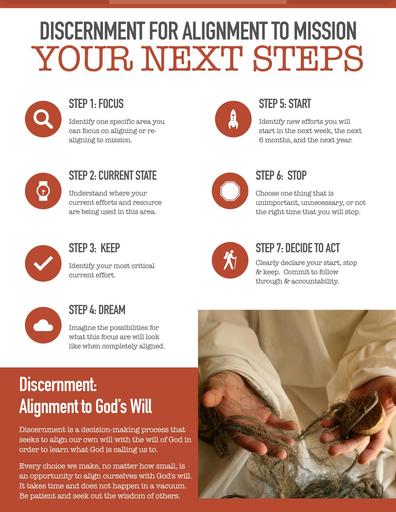
Bring one ministry into prayer with the people who know it firsthand. Ask what is bearing fruit, what you are continuing mostly because it has always been there, and what needs attention that you haven’t made room for. From what you hear, name what to keep, what to stop, and what to start.
Our simple discernment guide offers questions to help your team work through that together.
The reality is that can work through every why question and still avoid the answer that asks something of us. If we discover that a ministry we love is no longer serving its purpose, or that someone is bearing fruit we have never thought to support, are we willing to change where our time and attention go?
Most parishes will know this year's October count by Thanksgiving. Far fewer will know what happened in the people they counted.
Go Deeper in Parish Discernment
- Prayer & Discernment – Bringing parish decisions into prayer and learning to recognize what the Holy Spirit is asking.
- Parish Leadership & Evangelization Priorities – Examining whether the mission to make disciples actually shapes our time, staffing and decisions.
- Accompaniment in Action – Staying close enough to people to recognize where faith is growing and help them take their next step.
- Tools for Parish Leaders – Find the Discernment for Alignment to Mission guide and other resources for prayer, listening and formation.