
Originally published November 2021.
Thanksgiving has a way of bringing out family stories.
Some get told every year, usually with the same people interrupting to correct the details. Others come up unexpectedly while clearing dishes, playing cards, or remembering someone who isn't sitting at the table this year.
Sometimes those stories open the door to conversations about faith, too.
Of course, depending on your family, talking about Jesus might feel perfectly natural or like you're stepping into a minefield. Maybe you've had the experience of sharing something about your faith, only to be met with an eye roll, an awkward silence, or a comment that makes you wish you'd kept your mouth shut.
Or maybe you've been on the other side, so eager to share what you know about Jesus and the Church that you didn't notice the other person wasn't particularly interested in listening.
I've certainly been guilty of that second one.
A few years ago, Fr. Dan Beeman, a priest and pastor from Norfolk, Virginia, shared some suggestions for navigating conversations about faith and spirituality at Thanksgiving gatherings.

His suggestions are a good starting point. But what about the families where faith is a particularly tender subject? Where past hurts, disagreements, or difficult experiences with the Church have made even mentioning religion uncomfortable?
I'd add a few things to his list.

5. Know Your Story
Before you head into Thanksgiving, take a little time to think about your own experience of Jesus.
Not everything you know about Catholicism, or all the reasons you believe what the Church teaches. Think about an actual moment in your life when Jesus made a difference.
Maybe it was something significant that changed the whole direction of your life, or maybe it was a simple, ordinary moment that you didn't even recognize as God until later.
What happened? What were you struggling with or hoping for? Where did you recognize Jesus at work? And what changed because of that encounter?
And you don't need to have everything figured out before sharing. Sometimes we're still trying to understand what Jesus is doing in a particular part of our lives.
The important thing is to recognize that you have a story of God's work in your life.
Explore the Power of Story Hub
If you're struggling to recognize where Jesus has been at work in your life, or aren't sure how to put that experience into words, you'll find some exercises and reflection guides in our Power of Story Hub to help you get started.
6. Listen
This one can sometimes be harder than knowing your story.
When someone shares something about their life – especially something connected to faith, suffering, or their experiences with the Church – our instinct can be to respond. We want to offer encouragement, explain something they've misunderstood, share a similar experience, or just help them see where God might be working.
Instead, ask some questions and really listen to their answers. Ask about their experiences, what they've been going through, or how they understand God and His role in their lives. And then give them the space to respond without mentally preparing what you're going to say next.
Listen with the eyes and ears of Jesus.
Listen for the pain or disappointment behind an angry comment about the Church. Listen for the longing beneath someone's questions about God. Listen for the quiet ways the Holy Spirit might already be moving in a life that looks very different from yours.
And allow yourself to be fascinated by what God is doing in that person's life, even if they don't recognize His presence yet.
That doesn't mean agreeing with everything someone says or pretending that differences in belief don't matter. It means recognizing that the person in front of you is more important than winning the argument you think you're having.
Sometimes all you need to say is, "Thank you so much for sharing that."
7. Pray and Wait
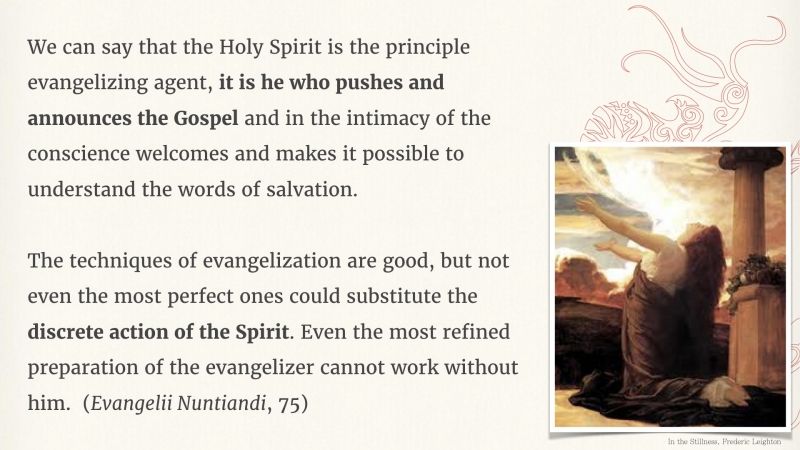 Sometimes I get in the way of the Holy Spirit's work.
I get so excited about the knowledge of my faith that I have received over the years that I am bursting with the desire to share that knowledge with someone else. Or I become overwhelmed with compassion and empathy and feel like I simply cannot help but to offer an in-the-moment prayer for their needs.
Other times, I launch into my own prepared witness without bothering to ask the Holy Spirit if the time is right – or the other person if they want to hear it.
My intentions might be good, but that doesn't necessarily mean I'm responding to what the Holy Spirit is asking of me.
Sometimes He prompts us to ask another question. Sometimes He gives us the courage to speak plainly about Jesus, even when we're uncomfortable. Sometimes He invites us to offer to pray with someone right then and there.
And sometimes He asks us to be quiet.
That last one can be particularly difficult when we care deeply about someone and want them to experience the love of Jesus that has changed our own lives.
Conversion isn't something we can manufacture through the right words, the perfect story, or a particularly convincing explanation. The Holy Spirit is the one who moves hearts, and we need to be attentive and willing to respond to the Spirit's promptings.
So when someone shares something personal with you this Thanksgiving, resist the temptation to fill every silence. Ask the Holy Spirit what He wants you to notice. Pay attention to whether the other person is inviting a deeper conversation or simply trusting you with a part of their story.
And if the conversation does open toward Jesus, don't be afraid to name Him.
Preparing for Thanksgiving
You'll likely spend the days and hours leading up to Thanksgiving preparing - cooking and baking, cleaning your home, decorating, putting up all the breakables, packing your suitcases, etc. Take some time to prepare your heart as well.
Pray for the People You'll Encounter
Think about the people you'll be gathering with this Thanksgiving, particularly those with whom conversations about faith have been difficult.
Pray for them by name.
Ask Jesus to help you see them as He does, rather than through the lens of past disagreements, frustration, or hurt.
Pray for their openness to His love, but also for your own openness to what He might want to show you through them.
And be honest with the Lord about the places where you're carrying defensiveness, resentment, impatience, or the need to be right.
We can spend so much time praying for someone else's heart to change that we forget to ask Jesus what needs to change in our own.
Be Ready to Share Your Story
Think back to that one moment when you recognized Jesus working in your life.
Could you share it in a minute or two, without turning it into a lesson or feeling obligated to explain every detail?
You don't need to memorize a testimony. Just become comfortable speaking naturally about your relationship with Jesus and the difference He has made.
And if someone asks a question that gives you an opportunity to share, pay attention to their response. Are they curious? Do they have questions? Is there something in your experience that connects with what they're going through?
Be Willing to Pray With Someone
We often tell people, "I'll pray for you," and hopefully we follow through. But sometimes the Holy Spirit invites us to do something more immediate.
"Would you mind if we prayed about that right now?"
That simple question can feel surprisingly uncomfortable, especially with family members who aren't accustomed to praying aloud together.
It also requires us to respect their answer. An invitation to prayer should always leave room for someone to decline.
If they welcome it, you don't need an elaborate prayer. Speak directly to Jesus about what they've shared. Ask Him for the healing, peace, wisdom, or strength they need.
If spontaneous prayer feels unfamiliar, the Diocese of Green Bay's Share Prayer: A Quick Guide to Intercessory Prayer offers a simple approach you can practice.
And if praying aloud isn't appropriate in that moment, you can always bring that person's needs to Jesus privately.
Make Room for the Thanksgiving Prayer
For some families, the most natural opportunity to speak about faith will be the prayer before the meal.
For others, even that can feel complicated.
If you're trying to find words that acknowledge both gratitude and the very real challenges your family may be carrying, we've shared some suggestions in How to Pray an Authentic Thanksgiving Prayer (Even When the Table's Awkward).
You don't have to pretend everything is wonderful in order to give thanks to God.
Recognize the Holy Spirit at Work
 I think one of the greatest temptations we face when sharing our faith with family is measuring the encounter by what we were able to say.
Did I bring up Jesus? Did I answer their question well? Did I miss an opportunity? Did I say too much?
Sometimes those are worthwhile questions to bring to prayer, but they can also reveal how easily we make ourselves responsible for what belongs to the Holy Spirit.
Think about the people you'll gather with this Thanksgiving. Some might be struggling with their faith. Others might have been hurt by the Church, or simply have no interest in talking about Jesus. And there are probably a few people whose opinions and behaviors you find particularly difficult to tolerate.
Jesus knows every one of them. He knows what they're carrying, what they're wrestling with, and what they need from Him.
He asks us to cooperate by paying attention, including to the moments when the Holy Spirit challenges our assumptions or prompts us to respond in a way we hadn't anticipated. Sometimes it means speaking when we'd rather stay quiet. Other times it means keeping our mouths shut even when we're convinced we have something important to say.
What might change about your Thanksgiving gathering if you spent less time planning what you might say about Jesus and more time asking Him to show you what He's already doing?
You might also like:
How to Pray an Authentic Thanksgiving Prayer (Even When the Table's Awkward)