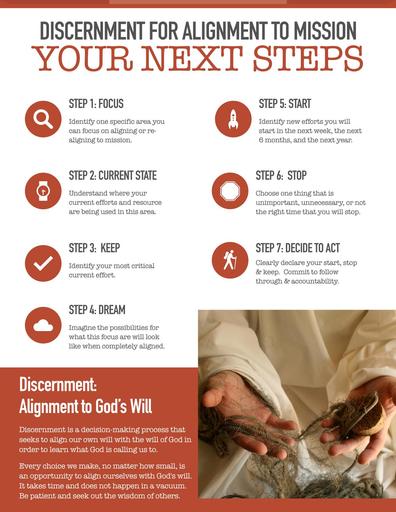
At more than one of our events, a diocesan leader gave the same answer whenever we asked people to reflect on their own discipleship: she did not think she was a disciple. She had formed such a demanding picture of what a disciple was supposed to look like in her own mind that she could not recognize herself in it.
Her coworkers saw her differently. They described her as the person people approached with their doubts and questions about faith. She regularly came to work with stories of praying with someone or sharing her faith with the friends of her young adult children.
She was already doing the things she did not believe she was ready to do.
Those of us responsible for formation can become so focused on the disciple we hope someone will eventually become that we miss what the Holy Spirit is already doing in the people in front of us, and never help them recognize it or call them forward.

Sending people is not what happens after formation. It is formation.
What Is a Missionary Disciple?
A disciple is someone actively responding to a relationship with Jesus. That response is intentional. As Sherry Weddell puts it, you do not become a disciple accidentally. Mass attendance, completed programs, and knowledge of the faith can all express that response. However, none of them, by itself, tells us whether someone is actively receiving and living the relationship Jesus offers.
Missionary describes where that relationship goes. Jesus did not call anyone to follow him without also sending them. “Go, therefore, and make disciples of all nations” (Mt 28:19) was spoken to the eleven even as Matthew notes that some still doubted (Mt 28:17).
Mission belongs to every baptized person. It does not wait for an outgoing personality, a staff title, or the completion of one more program. A missionary disciple keeps being converted while taking part in what Jesus is already doing.
Called, Accompanied, and Sent
Jesus called the Twelve before they understood who he was. He kept them close. He sent them out to preach and heal (Lk 9:1–6) while they were still arguing about which of them was greatest (Lk 9:46). He corrected them when they got it wrong, and after they abandoned him, he entrusted his Church to them anyway.
Before they went out to the ends of the earth, Jesus told them to wait for the Holy Spirit. Their confidence would not rest in having mastered the work, but in receiving the one who would accomplish it through them.
Leaders who form missionary disciples follow the same pattern. They pay attention to where God is already at work in someone. They call that person forward before readiness is obvious, entrust them with a real share in the mission, and stay close enough to encourage, correct, and help them make sense of what happens.
What Calling People Forward Does Not Mean
Someone helping with the youth retreat needs a background check and safe-environment training. A catechist needs to know what the Church teaches. Those requirements protect people, and they serve the mission.
But a parishioner who wants to host a small group in her home is sometimes told to finish a two-year certification first. A man who came back to the Church last year may wait a long time to be asked to do anything beyond ushering. Usually no single requirement is the problem. Added together, requirements can become a bar few people clear, and one that sometimes protects leaders from the risk of letting go more than it furthers the mission.
Calling people forward also doesn't mean copying what worked somewhere else. A parish staff comes home from a conference ready to launch the small-group model that renewed a parish five times their size. Meanwhile, the people in their own pews who could lead are already hosting neighbors for dinner and praying with coworkers. The work is noticing what the Holy Spirit is already doing among your people.
When Formation Becomes a Substitute for Mission
Parishes need sound teaching, responsible processes, and appropriate preparation. The danger begins when we expect passive input to produce the fruit without ever encouraging our people to start applying that formation outward.
This problem is especially visible in adult formation, where participation can be measured for years without asking whether adults are being called into witness, accompaniment, and mission. Read why adult discipleship must become a parish priority →
One parish started counting the number of Missionary Disciples in their parish based on how many had attended a one day workshop on evangelization without ever asking how those attendees had applied the workshop principles outside of the parish hall.
Attendance becomes the primary measure of growth because it is easy to count. Certification becomes a substitute for discerning whether someone is ready for a particular responsibility. When uncertainty appears, we add more preparation. Leaders retain meaningful responsibility because allowing someone else to carry it feels inefficient or risky.
Pope Francis has described this temptation as a form of neo-Pelagianism: trusting our analysis, discipline, and systems in ways that leave little room for grace.
Read A Pentecost People → for a deeper reflection on formation, trust, and the Holy Spirit.
What Sustains Disciples as They Are Sent
Kerygma, Story, Accompaniment, and Prayer & Discernment are not four stages to complete before someone can participate in mission. They are dimensions of discipleship that people return to throughout their lives as they follow Jesus and help others follow him.
The U.S. bishops’ Living as Missionary Disciples describes the broader work of evangelization in four movements: encounter, accompany, community, and send. The four areas below support disciples and leaders within those movements.
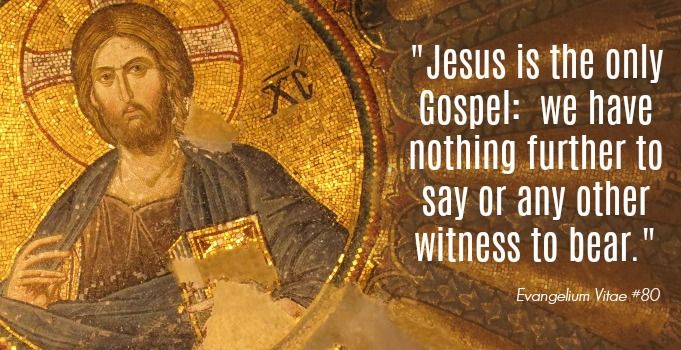
The Kerygma
Missionary disciples continually receive the Gospel themselves and learn to proclaim Jesus clearly to others.
Begin here if: Catholic language and activity are present, but people struggle to name the saving work of Jesus or invite a response.
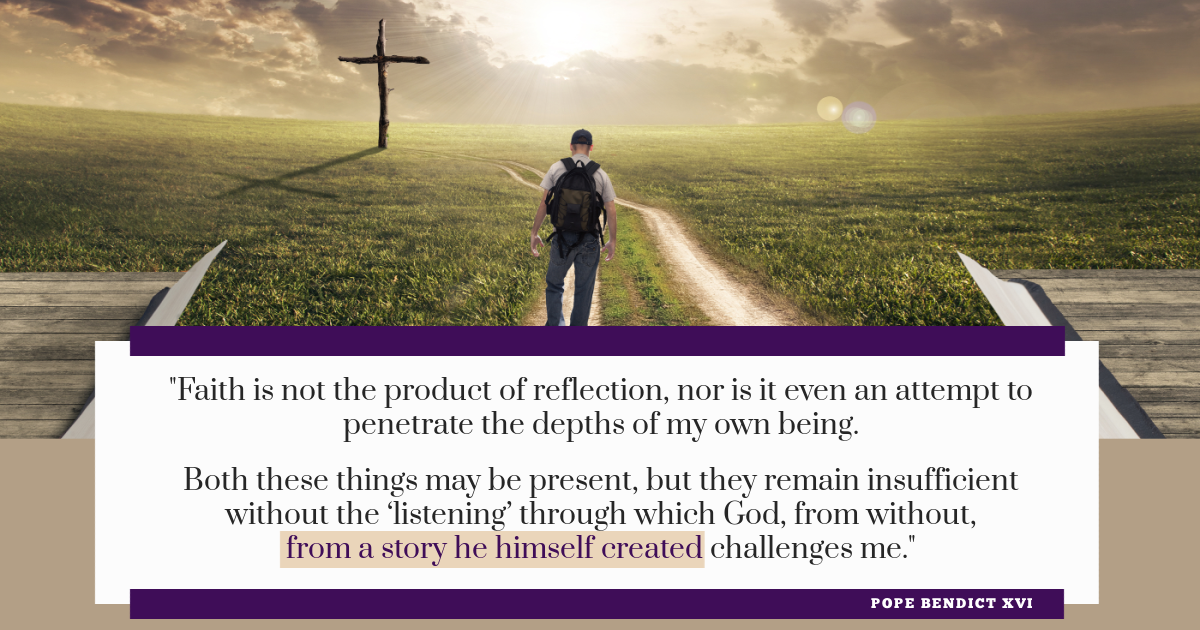
The Power of Story
Disciples learn to recognize and name what God has done—not as polished performers, but as credible witnesses.
Begin here if: People can explain Catholic teaching but struggle to speak personally about encountering God.
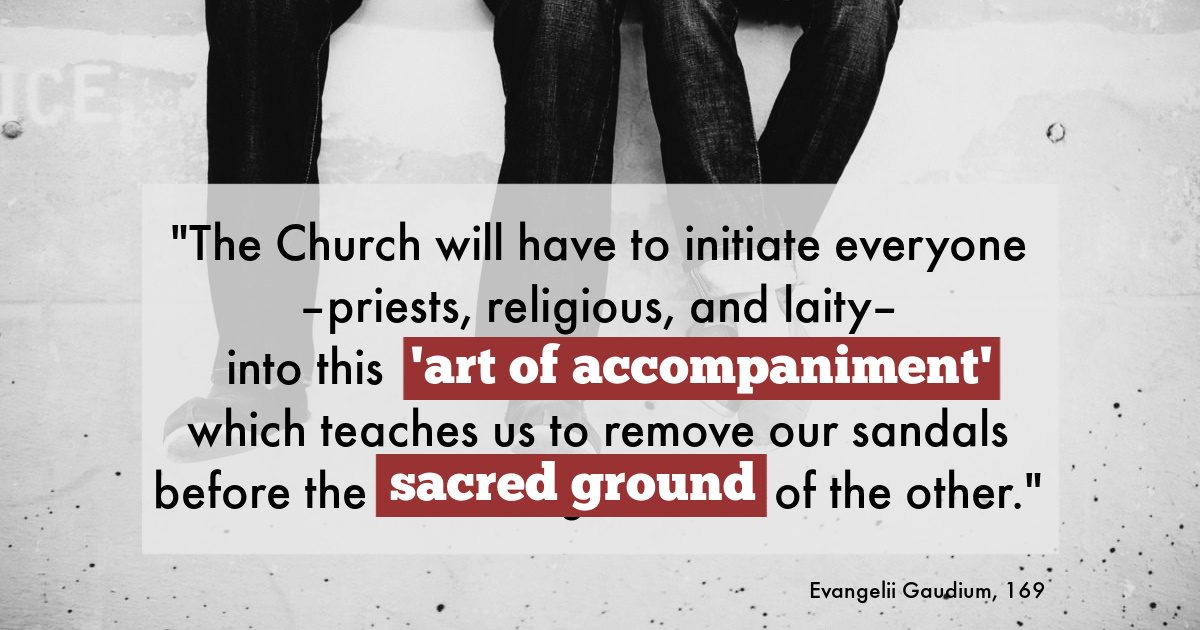
Accompaniment
People are trusted with real relationships while someone remains close enough to listen, encourage, correct, and help them discern.
Begin here if: Your parish moves people through programs, but few people are personally known, called forth, or walked with.

Prayer & Discernment
Prayer teaches disciples and leaders to notice what the Holy Spirit is already doing rather than assuming they must manufacture the result.
Begin here if: Decisions are governed primarily by urgency, habit, measurable inputs, or fear of failure.
Questions for Leaders
Who have I called forth?
- Who is God already working through that I may be overlooking because they do not seem ready?
- Who am I accompanying as they take real responsibility for mission?
- Where have our requirements protected people—and where have they merely delayed participation?
Continue From Here
Tools for Parish Leaders
Explore practical tools that support Gospel proclamation, witness, accompaniment, prayer, and discernment within formation already underway.
Support for Leaders
Burning Hearts accompanies parish, school, and diocesan leaders through discernment, leadership formation, and cultural change.